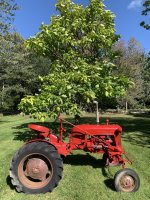
Dads 1953 cub

migmadman5

New member
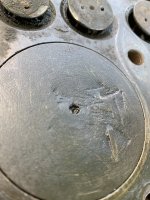
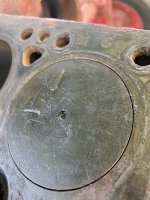
Hi , new member here decided to save my fathers by cub that’s been sitting for 25 years . Surprisingly things were better than I thought they’d be . My plan is to freshen up the engine and get it going I’ve done this work before . Just wondering if anyone has seen this on #2 piston cylinders are good seems like it must have been previous damage or used piston ? Thanks Paul in NH
 

Attachments

  • IMG_5585.jpeg
    IMG_5585.jpeg
    1.7 MB · Views: 30
  • IMG_5584.jpeg
    IMG_5584.jpeg
    1.7 MB · Views: 30
Hi,
It looks like a foreign object was in the cylinder, hitting on top of the piston.
I was wondering why you took the head off, if the engine has good compression, and good oil pressure, and ran well, it may have been ok the way it is.
A compression test would have shown how the compression is.
Here is info about putting the head on a Cub engine.

Clean the head well, and check it with a straight edge, and see if the bottom of it is flat. If it is warped, it should be flattened at an engine shop.
Check the head and block for cracks. They can be small.
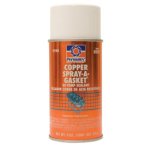
The people on here like to use Permatex Copper Spray on the new head gasket, before putting the head on the engine. It helps it seal well. Spray both sides of the gasket, just as you are going to put it together, and put the head on before the Copper Spray dries.
Use an even application of the spray on the gasket. Practice a little on some flat metal, if you have never used Copper Spray before. I think they sell it at NAPA.

When you put it together, the head bolts should have NON hardening sealer put on the bottom 1/2" of the threads before putting them in. The bolts go into the water jacket, and water can run up the bolt threads without sealer. tst has said this on here too, he rebuilds many Cub engines.
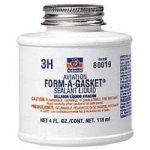
I use Permatex Aviation Form A Gasket, it is a non hardening liquid. It comes in a small can. They have it at NAPA here in the west US. If you buy one, stir it well, before using it, it can settle in the can sitting.
Below are pictures of the 2 products.

Before putting the head on, I would turn all the bolts in the holes by hand, without the sealer, and be sure they turn easily. Then remove them.
They have to turn easily to get an accurate torque reading. Use a tap in the holes to clean them, if needed, and a die on the bolts, if you didn't buy new bolts.

When it is together again, I would wait a day before putting coolant in the radiator and engine, it will let the sealers dry some. Don't run the engine without coolant in it. Good luck. :)
 

Attachments

  • Cub Copper coat.jpg
    Cub Copper coat.jpg
    16.7 KB · Views: 0
  • Cub Permatex.jpg
    Cub Permatex.jpg
    8.5 KB · Views: 0
Last edited:
Here is more info.
Below is a page from the Cub service manual, GSS-1411, showing the head bolt torque sequence.

I would read the engine section in the manual, if you haven't.
The head bolts are supposed to be torqued to 45 ft lbs.
Tighten the bolts gradually. I would tighten them to 25 ft lbs, then 35 ft lbs, then 45 ft lbs, each time following the torque sequence.
Before putting in the head bolts, remember there is a holder for the spark plug wires that goes on the 3rd head bolt from the front, on the right.
Below is a listing for it at TM Tractor Parts, with pics of it, if you don't have a holder.
Maybe you knew this already. :)
 
Last edited:
yes looks at one time something fell in there and the engine chewed it up and spit it out, may not really hurt anything, and head damage ?
 
Hi,
It looks like a foreign object was in the cylinder, hitting on top of the piston.
I was wondering why you took the head off, if the engine has good compression, and good oil pressure, and ran well, it may have been ok the way it is.
A compression test would have shown how the compression is.
Here is info about putting head on a Cub engine.

Clean the head well, and check it with a straight edge, and see if the bottom of it is flat. If it is warped, it should be flattened at an engine shop.
Check the head and block for cracks. They can be small.
The people on here like to use Permatex Copper Spray on the new head gasket, before putting the head on the engine. It helps it seal well. Spray both sides of the gasket, just as you are going to put it together, and put the head on before the Copper Spray dries.
Use an even application of the spray on the gasket. Practice a little on some flat metal, if you have never used Copper Spray before. I think they sell it at NAPA.

When you put it together, the head bolts should have NON hardening sealer put on the bottom 1/2" of the threads before putting them in. The bolts go into the water jacket, and water can run up the bolt threads without sealer. tst has said this on here too, he rebuilds many Cub engines.
I use Permatex Aviation Form A Gasket, it is a non hardening liquid. It comes in a small can. They have it at NAPA here in the west US. If you buy one, stir it well, before using it, it can settle in the can sitting.

Before putting the head on, I would turn all the bolts in the holes by hand, without the sealer, and be sure they turn easily. Then remove them.
They have to turn easily to get an accurate torque reading. Use a tap in the holes to clean them, if needed, and a die on the bolts, if you didn't buy new bolts.

When it is together again, I would wait a day before putting coolant in the radiator and engine, it will let the sealers dry some. Don't run the engine without coolant in it. Good luck. :)
Hi , I knew the valves were stuck that's the reason for pulling the head dealing with things one by one.Thanks
 
Here is more info.
Below is a page from the Cub service manual, GSS-1411, showing the head bolt torque sequence.

I would read the engine section in the manual, if you haven't.
The head bolts are supposed to be torqued to 45 ft lbs.
Tighten the bolts gradually. I would tighten them to 25 ft lbs, then 35 ft lbs, then 45 ft lbs, each time following the torque sequence.
Before putting in the head bolts, remember there is a holder for the spark plug wires that goes on the 3rd head bolt from the front, on the right.
Below is a listing for it at TM Tractor Parts, with pics of it, if you don't have a holder.
Maybe you knew this already. :)
Glen,
Thanks for all the info got my valves free I plan replacing them along with guides .You mentioned compression test which brings me to the next step I was planning on doing rings and rod bearings since its apart but wonder if I need to the bore looks good doesn't seem to be any pits or marks and lower end seems tight.This was a donor engine that we never heard run but some one else has done engine work before in its life. I guess I'm leaning towards just leaving it as is and taking the chance. I should add I don't have access to Micrometers etc.
Thanks Paul
 
Last edited:
In normal operation, the piston rings do not go completely to the top of the cylinder. Thus, normal cylinder wear leaves an unworn ridge at the top. The height of the ridge is a fair indicator of the amount of wear. Can you see/feel a ridge on your cylinders? It is your call on how much ridge to ignore. If I couldn't easily catch a fingernail, I would certainly ignore it and go on. Carbon can accumulate in the same area as the ridge. Try not to confuse a carbon deposit with cylinder wear.
 
In normal operation, the piston rings do not go completely to the top of the cylinder. Thus, normal cylinder wear leaves an unworn ridge at the top. The height of the ridge is a fair indicator of the amount of wear. Can you see/feel a ridge on your cylinders? It is your call on how much ridge to ignore. If I couldn't easily catch a fingernail, I would certainly ignore it and go on. Carbon can accumulate in the same area as the ridge. Try not to confuse a carbon deposit with cylinder wear.
Jim,
I just checked again as far as I can tell no ridge at all cylinders are as smooth as glass unless that glazing ?
 
Jim,
I just checked again as far as I can tell no ridge at all cylinders are as smooth as glass unless that glazing ?
I'd finish the valve job, put the head back on and run it. There is little at risk (a head gasket and a little assembly time) if it proves out later on to need rings or crank bearings. Follow the assembly suggestions already given in this thread. Prime the oil pump before the first start.
 
I'd finish the valve job, put the head back on and run it. There is little at risk (a head gasket and a little assembly time) if it proves out later on to need rings or crank bearings. Follow the assembly suggestions already given in this thread. Prime the oil pump before the first start.
That's exactly what I'm going to do thanks for your help.
 
Thanks for all the info got my valves free I plan replacing them along with guides .
If you are replacing the valve guides, the ID of them needs measuring after putting them in, and reaming if they are too small. The valve stems have to have the right clearance in the guides, so they are not too tight.
I remember a man on here said he had his Cub engine rebuilt, and the valve guides replaced. He said when he ran the engine, after it warmed up in 20 minutes or so, one valve would stick open, and the engine would miss. After we discussed it on here, I think he asked at the shop, and they said they had not measured the ID of the guides.
It would seem the valve stuck open when the metal warmed up and expanded.
To avoid that possibly happening, I would buy equipment to measure the valve guide IDs, and the stem clearance.
If you can't get measuring equipment, I would use the guides it has, if possible.
Try the new valves in them and see if they fit good enough to use.

Below is the Cub and LoBoy service manual, it has lots of info.
I would read the engine section, section 1, before working on the engine.
There is a contents beginning on page 1 of most sections, that makes it easier to use online.
The info about valve guide ID, and clearance with the valve stems is on page 1-7.
https://farmallcub.club/rudi/farmallcub.com/rudi_cub/www.cleancomputes.com/Cub/Blue Ribbon Service Manuals/GSS-1411 Service Manual for Cubs and Lo-boy Tractors/index.html

This manual was made in the 1970's so it has newer, 12 volt electrical system info. :)
 
Last edited:
Back
Top