

ricky racer
501 Club
Early in February the company that I retired from contacted me and asked if I would consider going to Huntsville, Alabama to do some work for NASA. They had a young guy, Ryan that could go but he is somewhat inexperienced and could really use some help with the work. Since they had no one else who could go I agreed. The trip was originally set for the week of February 28th but got pushed back to March 21st and finally happened this week.
We left early on Sunday morning and made the drive down there. The scheduled work we figured would take 2-1/2 to 3 days and ended up taking the whole 3 days to preform. The machine we were sent to work on was a Friction Stir Welding machine. Friction stir welding is a little known method of doing a mechanical weld without using any electrical arc as used in more common welding applications. It's used in aerospace applications due to it's superior weld strength and weld quality. If you want more information on friction stir welding you can find out more by a simple Google search.
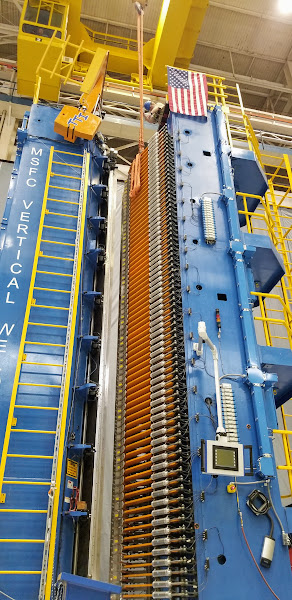
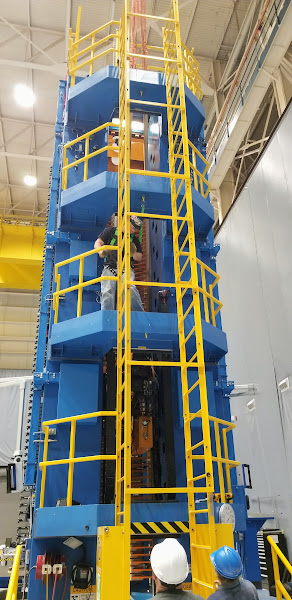
The welder Ryan and I went to work on is used by NASA to weld aluminum panels together in the construction of rockets. It is currently being used in the construction of NASA's new Space Launch System (SLS) which is the largest rocket ever built.
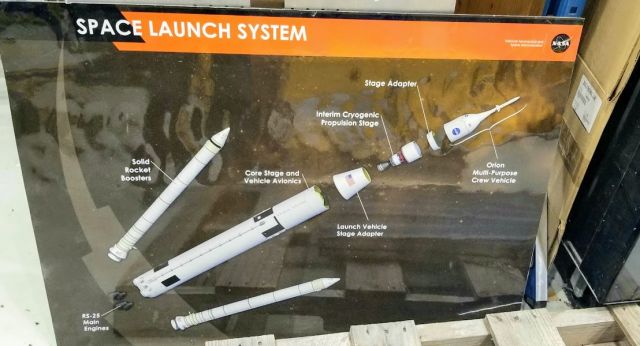
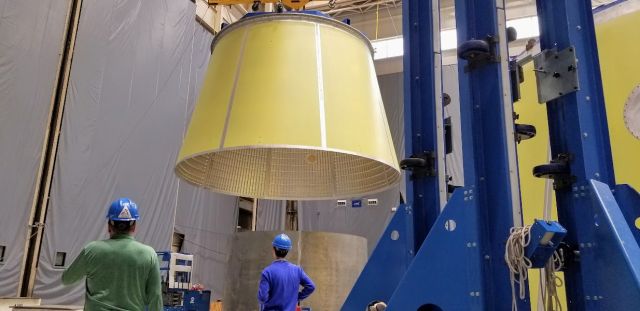
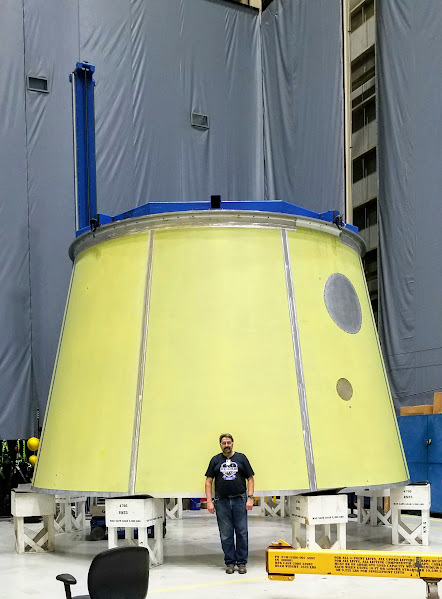
While we were there, they were working on the Launch Vehicle Stage Adapter which makes the transition from the core stage, (the large diameter portion of the rocket which houses the liquid fuel used to propel the rocket into orbit) to the smaller diameter Orion capsule which will house the Astronauts. Inside the Stage Adapter will be the Interim Cryogenic Propulsion Stage that will separate the Orion capsule from the core stage and further push it into orbit. The Stage Adapter is made from two conical cylinders that are welded together to form one solid conical shaped cylinder. They are primed with a zinc chromate primer and once assembled they will be coated with 1-1/2" of foam for insulation.
This is the lower portion of the Stage Adapter assembly;
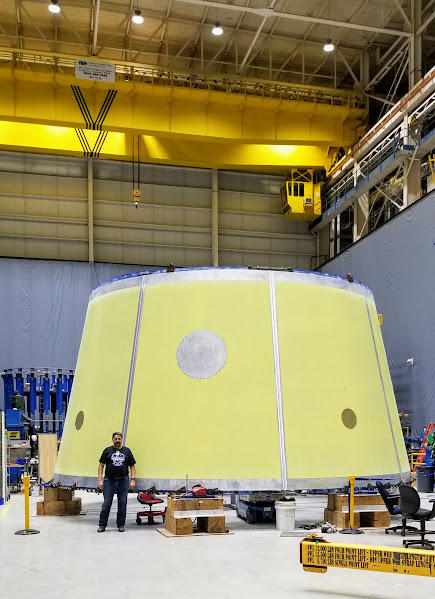
This is the smaller upper portion of the assembly;
This is a file photo from NASA showing one portion of the Stage Adapter being welded:
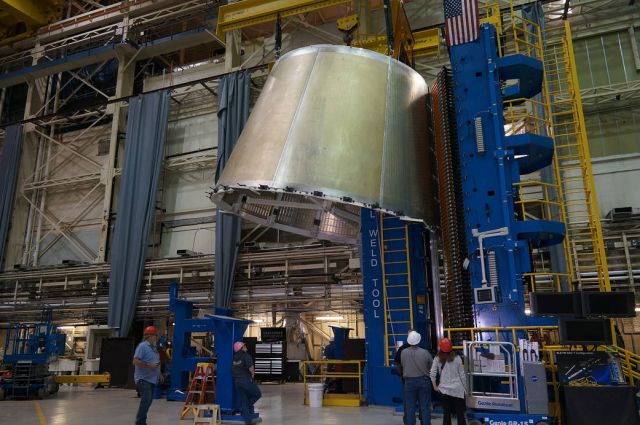
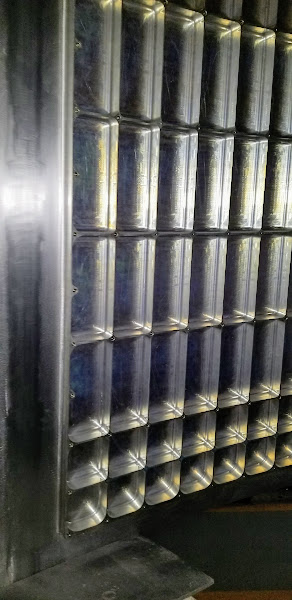
Each of the two portions of the Stage Adapter are made from 8 panels of 2" thick aluminum. The panels are sent to Germany (why Germany, I don't know) to be machined. The backside of each panel is machined to remove weight without removing strength. The panels end up being approximately 1/2" thick with ribs on the inside and access ports. The panels are then rolled to give them their curved shape. The curved panels are then fitted together and welded using friction stir welding.
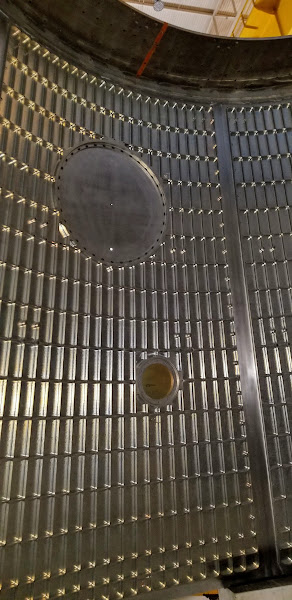
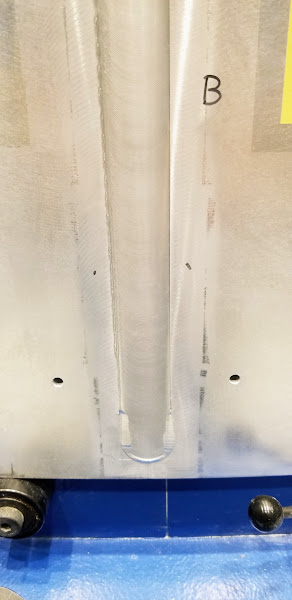
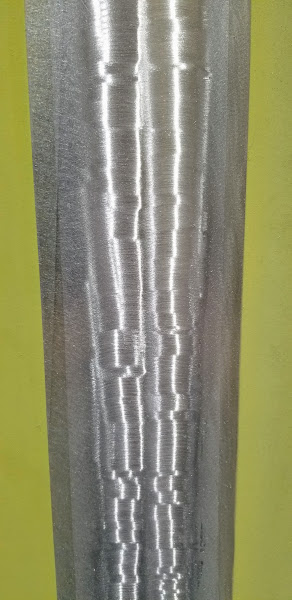
Here is a picture of a completed friction stir weld on the Stage Adapter and another picture after workers dress the welds to remove any flash.
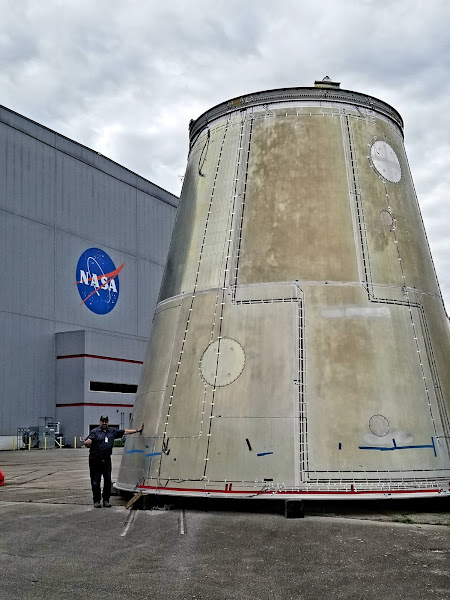
This is a mockup of a completed Stage Adapter assembly outside of the NASA facility.
The Stage Adapter currently being worked on will be for the 3rd SLS rocket. The first one of it's kind is at the Cape now being tested. It will be unmanned and will be used for a test flight, orbiting the earth and moon before coming back to earth. It's set to launch in June or July of this year. The second and third rockets will deliver astronauts into space with a moon landing planned. The Stage Adapter is only one small part of the SLS rocket assembly and I feel privileged to see the inner workings of how these massive machines are made.
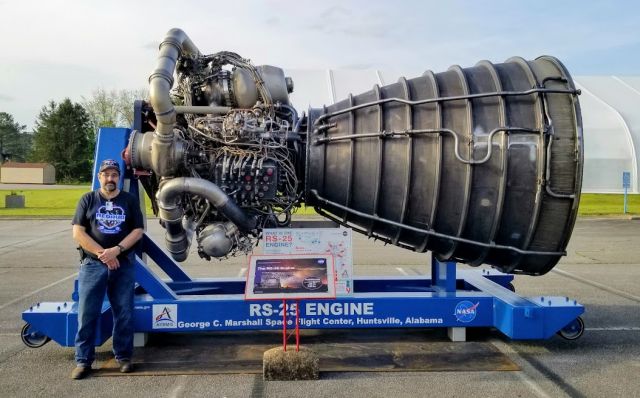
Fun fact: The SLS rocket will produce 8.8 million pounds of thrust. I haven't run any calculations yet but I believe that's more than twice as powerful as even a very well tuned Cub. The Cub does however surpass the SLS when it comes to fuel efficiency. The SLS will consume 22,000 pounds of fuel per second making the Cub the clear winner in this category. The Cub is much quieter and more enjoyable to be around than the SLS as far as noise emissions go as well. The exhaust gases will exit the RS-25 (one of 4 engines the SLS will use, shown below) at 13 times the speed of sound which most likely will require ear plugs to work around so again the Cub is the clear winner here as well! After 70 years, many Cubs are still in use and going strong. The RS-25 has a life expectancy of 8.5 minutes but that's okay, it's paid for with tax dollars...
One last thing regarding the trip to NASA. It's still cold and occasionally snowing here in Michigan and Ryan and I both enjoy riding our motorcycles. We had to rent a vehicle to drive down to Alabama anyway so we rented a Sprinter van, loaded the tools needed for the job and had room to load our bikes as well. After the work was done, we took some time and did a little riding in Tennessee before heading home!! 8)


We left early on Sunday morning and made the drive down there. The scheduled work we figured would take 2-1/2 to 3 days and ended up taking the whole 3 days to preform. The machine we were sent to work on was a Friction Stir Welding machine. Friction stir welding is a little known method of doing a mechanical weld without using any electrical arc as used in more common welding applications. It's used in aerospace applications due to it's superior weld strength and weld quality. If you want more information on friction stir welding you can find out more by a simple Google search.
The welder Ryan and I went to work on is used by NASA to weld aluminum panels together in the construction of rockets. It is currently being used in the construction of NASA's new Space Launch System (SLS) which is the largest rocket ever built.
While we were there, they were working on the Launch Vehicle Stage Adapter which makes the transition from the core stage, (the large diameter portion of the rocket which houses the liquid fuel used to propel the rocket into orbit) to the smaller diameter Orion capsule which will house the Astronauts. Inside the Stage Adapter will be the Interim Cryogenic Propulsion Stage that will separate the Orion capsule from the core stage and further push it into orbit. The Stage Adapter is made from two conical cylinders that are welded together to form one solid conical shaped cylinder. They are primed with a zinc chromate primer and once assembled they will be coated with 1-1/2" of foam for insulation.
This is the lower portion of the Stage Adapter assembly;
This is the smaller upper portion of the assembly;
This is a file photo from NASA showing one portion of the Stage Adapter being welded:
Each of the two portions of the Stage Adapter are made from 8 panels of 2" thick aluminum. The panels are sent to Germany (why Germany, I don't know) to be machined. The backside of each panel is machined to remove weight without removing strength. The panels end up being approximately 1/2" thick with ribs on the inside and access ports. The panels are then rolled to give them their curved shape. The curved panels are then fitted together and welded using friction stir welding.
Here is a picture of a completed friction stir weld on the Stage Adapter and another picture after workers dress the welds to remove any flash.
This is a mockup of a completed Stage Adapter assembly outside of the NASA facility.
The Stage Adapter currently being worked on will be for the 3rd SLS rocket. The first one of it's kind is at the Cape now being tested. It will be unmanned and will be used for a test flight, orbiting the earth and moon before coming back to earth. It's set to launch in June or July of this year. The second and third rockets will deliver astronauts into space with a moon landing planned. The Stage Adapter is only one small part of the SLS rocket assembly and I feel privileged to see the inner workings of how these massive machines are made.
Fun fact: The SLS rocket will produce 8.8 million pounds of thrust. I haven't run any calculations yet but I believe that's more than twice as powerful as even a very well tuned Cub. The Cub does however surpass the SLS when it comes to fuel efficiency. The SLS will consume 22,000 pounds of fuel per second making the Cub the clear winner in this category. The Cub is much quieter and more enjoyable to be around than the SLS as far as noise emissions go as well. The exhaust gases will exit the RS-25 (one of 4 engines the SLS will use, shown below) at 13 times the speed of sound which most likely will require ear plugs to work around so again the Cub is the clear winner here as well! After 70 years, many Cubs are still in use and going strong. The RS-25 has a life expectancy of 8.5 minutes but that's okay, it's paid for with tax dollars...
One last thing regarding the trip to NASA. It's still cold and occasionally snowing here in Michigan and Ryan and I both enjoy riding our motorcycles. We had to rent a vehicle to drive down to Alabama anyway so we rented a Sprinter van, loaded the tools needed for the job and had room to load our bikes as well. After the work was done, we took some time and did a little riding in Tennessee before heading home!! 8)


