HiltzMachineWorks
Active member
I recently saw a post on a social media platform about a gentleman who unfortunately cracked both his engine block and the radiator bolster while plowing snow.
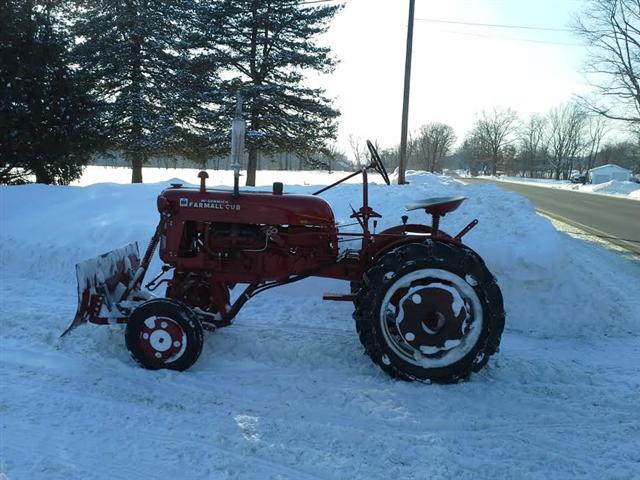
It appeared that he had the older 54 Plow without the vertical spring/shock like the 54-A plows.
I’m wondering if cracking the bolster is common when pushing snow or dirt. I’ve only recently been using my Cub to plow snow (maybe 5 years), but the Cub has been in my family my entire life.
Does the older plow without the “vertical” spring have a higher rate of issues? It seems as though my later 54-A plow has enough slop in the entire system that it would be difficult to shock the casting hard enough to crack it. The plow has enough “give” between the blade, the upper and lower shock/springs and mounts that it would absorb impact.
Of course, I’m very careful not to ram the tractor into hard packed snow or obstacles.
Are there other preventative measures that could be taken to prevent damaging the tractor?
It appeared that he had the older 54 Plow without the vertical spring/shock like the 54-A plows.
I’m wondering if cracking the bolster is common when pushing snow or dirt. I’ve only recently been using my Cub to plow snow (maybe 5 years), but the Cub has been in my family my entire life.
Does the older plow without the “vertical” spring have a higher rate of issues? It seems as though my later 54-A plow has enough slop in the entire system that it would be difficult to shock the casting hard enough to crack it. The plow has enough “give” between the blade, the upper and lower shock/springs and mounts that it would absorb impact.
Of course, I’m very careful not to ram the tractor into hard packed snow or obstacles.
Are there other preventative measures that could be taken to prevent damaging the tractor?