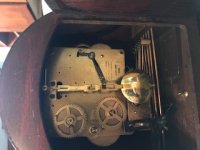
Seth Thomas Mantle Clock

lyle11

501 Club
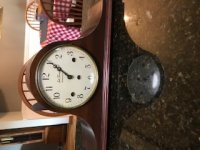
I have a Seth Thomas mantle clock from the mid 1960s that has sentimental value and I really like the chimes. These old Seth Thomas clocks are all over Ebay in the $25-$50 range usually not working. So, they aren’t real valuable. My late brother spent $200 having this one repaired at a clockmaker about 10 years ago but it still wouldn’t run consistently and now I can’t get it to run at all for over 30 seconds.

I’ve looked at an antique clock forum and I’m not really interested in taking it apart and replacing parts. Based on my brother’s repair experience it wasn’t worth it.

My question is, does anyone have any experience installing a new replacement movement in one of these old wind-up clocks? Or any experience with a specific brand of replacement movement? Or has ordered one from a website that they recommend? I see a German company Hermle that makes them. Not sure if there are any others. I found a website but so far it has not been responsive.

Thanks
CD319165-BBAB-4A37-A956-49D7CAD6CFD4.jpeg

B4F97B06-5546-4450-A663-2CEE5D0D8639.jpeg

361AD869-AC5F-411C-96E4-8CEA14B6FC93.jpeg
 
Lubricate all of the gear pivots. The lub gets dry and gums thing up.

You will need a specific lubricant for clocks.
 
Thanks. I took the movement out and I guess I’ll see if I can lube it and get it to run before I install it back in the clock. Doing some research online, it looks like Hermle has built the movements for Seth Thomas since the late 50s and still makes brand new replacement movements. A new one for my clock costs $255. Saw a place online that rebuilds them for $195.

If oiling it doesn’t work, I think replacement parts would add up fast and going with a new movement is the best plan. The inside looks very clean which would make sense since it was worked on about 7-8 years ago.
 
It may need some cleaning before lubing it. As a last ditch attempt, pull the whole works out and soak it for a day or two in kerosene. It will probably need to drip dry for a long time before you put it back in the cabinet.
 
I have heard of placing a small tray of kerosene inside the clock and let the vapor gently soften the hardened lubricants. This made ours work a lot better but still not perfect. It took about two weeks with fiddling with starting it a couple of times a day before it loosened up. This wont undo what the clockmaker did years ago but its cheap and easy.

Good Luck
 
Being level is very critical to these old clocks. See if you can find a compensation adjustment at the top of the pendulum arm. If the clock shop serviced it properly, it may be something that simple.
 
My dad passed away a little over a year ago. He had a complete watch and clock shop set up in the basement and had a bunch of mantle clocks as well. We are in the process of cleaning everything out. I think there may be one of these clocks in the collection. I'll look next time I'm there.
 
I have one of these - handed down from my grandfather. It was serviced not long before he passed. I'm certain the service cost more than the clock is worth. I haven't wound that clock in a few years. Thanks for the reminder! Maybe I'll pull out that old clock and give it a twist.
 
Since my mantle clock has a relatively simple movement and I wanted to get it working, I bought a brand new Germany made movement (Hermle) for $255. There are other much more elaborate movements that cost $1,500+ which would have been too much money for me.

I installed the movement yesterday. I had to use the mounting brackets off the old movement, which are fastened directly into the wood with 8 screws. The new mounting bracket would work but I didn’t want to create more screw holes.

The other thing I found was that the hammers didn’t reach the chime rods. Through a little research I found out that you bend the hammer rods until they sit about 1/8” over the chime rods. They need to strike the rod but bounce off it so it can vibrate.
After some testing I have the chimes sounding good.

One remaining issue is that the hour hand from my old clock doesn’t fit. The shaft from the new movement is a smaller diameter and it is a slide on friction fit. The minute hand fits fine and it’s been working good since yesterday. The other issue is that it chimes about 3 minutes early (at 12 minutes after instead of 15, etc). I have read that this is rectified by rotating the minute hand around a movable center insert until it lines up properly. I am going to order a set of hands on Tuesday, so I’ll address that after I get the new hands if it’s still an issue.

As for the old movement, I appreciate the ideas offered. I’m going to make a simple mounting board for it and see if I can get it working for minimal expense. If I can get it working I’ll see if I can find a cheap clock case with a bad movement on Ebay. I can see how it is kind of fun to work on these old clocks and satisfying to get it running. But, I can also see how you can quickly spend a lot of money on parts only to have it work for only a year or two.

It’s surprising how many movements they still make and are available right off the shelf. The place I bought it from fixes movements but states that it costs 1/2 as much to buy a new movement, still manufactured in Germany by the same company. It is pre-oiled and doesn’t need to be oiled for 10 years. Most don’t get oiled and usually start having problems after 10+ years.

The only grandmother I remember died in 1964. She left my father $25. He bought this clock with that $25.
 
https://frankenmuthclock.com/

My brother recently sold this clock company after starting it about 40 years ago. They had 3 full time repair persons on staff. When I was in the basement last it was floor to ceiling with parts. Every year they traveled to Germany to purchase clocks, parts, and other novelties. At one time they were two years behind in repair, but i believe they are past that.

You have nothing to lose by calling them. They do a very large business online for clocks and parts. They will have what you need probably.

Ted
 
Back
Top