Need help identifying an old hay wagon

Lt.Mike

501 Club
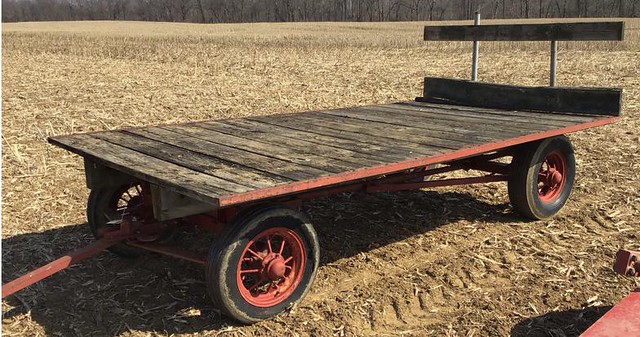
We went to an auction yesterday with the intent of bringing home an older hay wagon.
Needless to say we were successful :{_}:
We were more interested in its look that its origin, something that would be a good match for my 40's and 50's Farmall's, A's Super A's, and Cub's.
The deck on this isn't huge and is a good fit for my tractors. I posted earlier yesterday a quick pic and Jim guessed it dated from the mid 30's to the mid 40's, maybe the 50's and that works well.
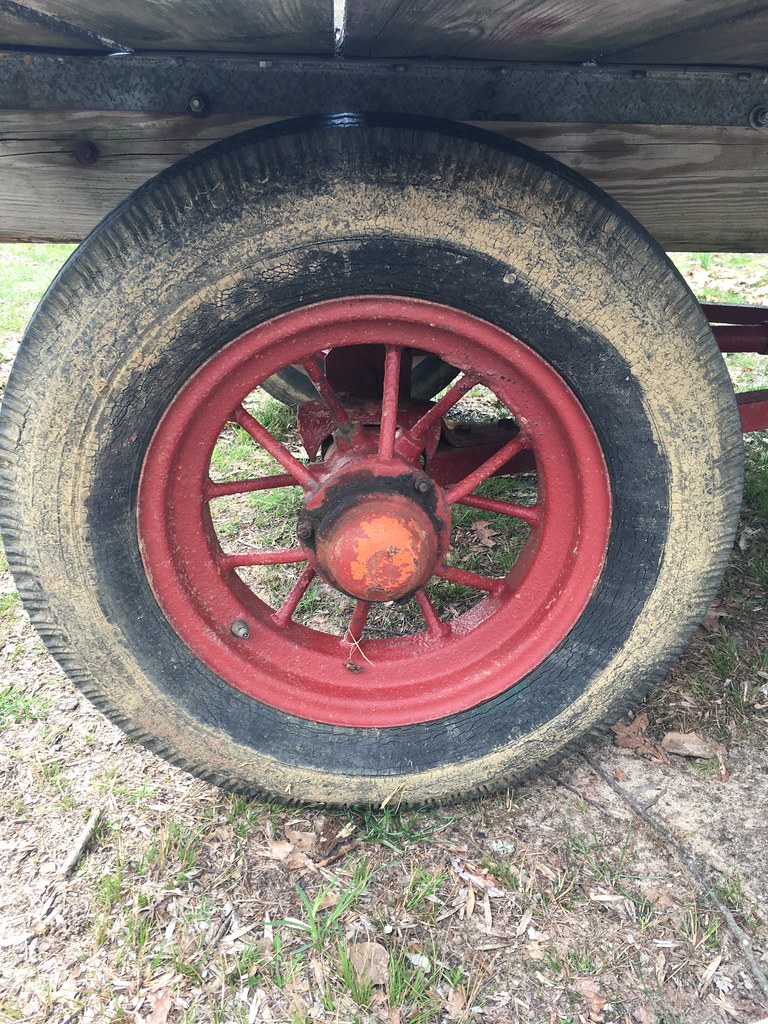
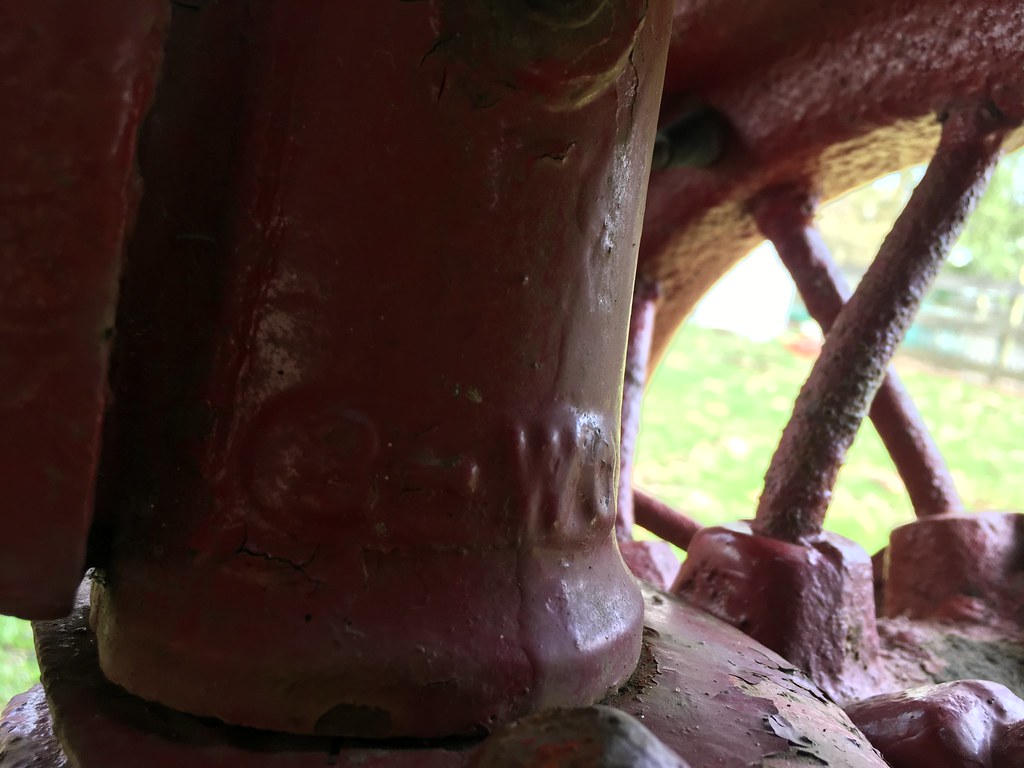
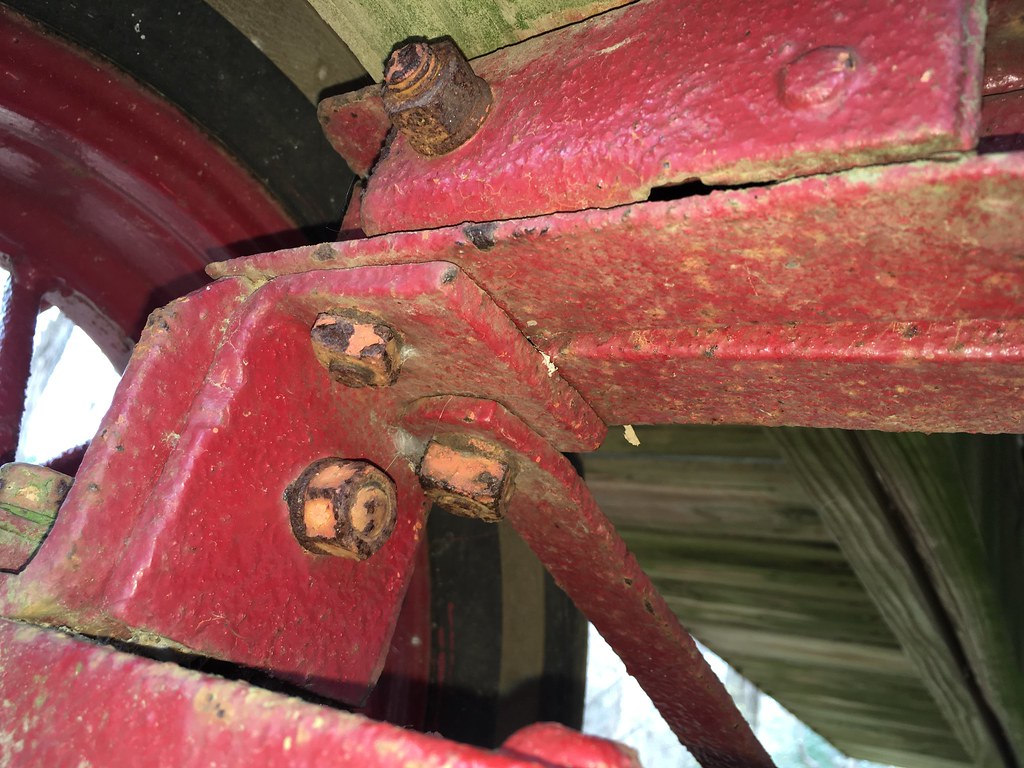
last night I googled it and found one made by International Harvester that looked very much like it. It was from the 30's and being IH it wouldn't be a better match for my collection! I went out this morning and gave it a good looking over. While the wheels look dead on the frame and steering spindles are different. I looked hard for casting marks but didn't find the IH I was looking for. On the front spindles there are two markings though, "I - WC" with "3 - WC" (or "3 - WG") on the opposite side.
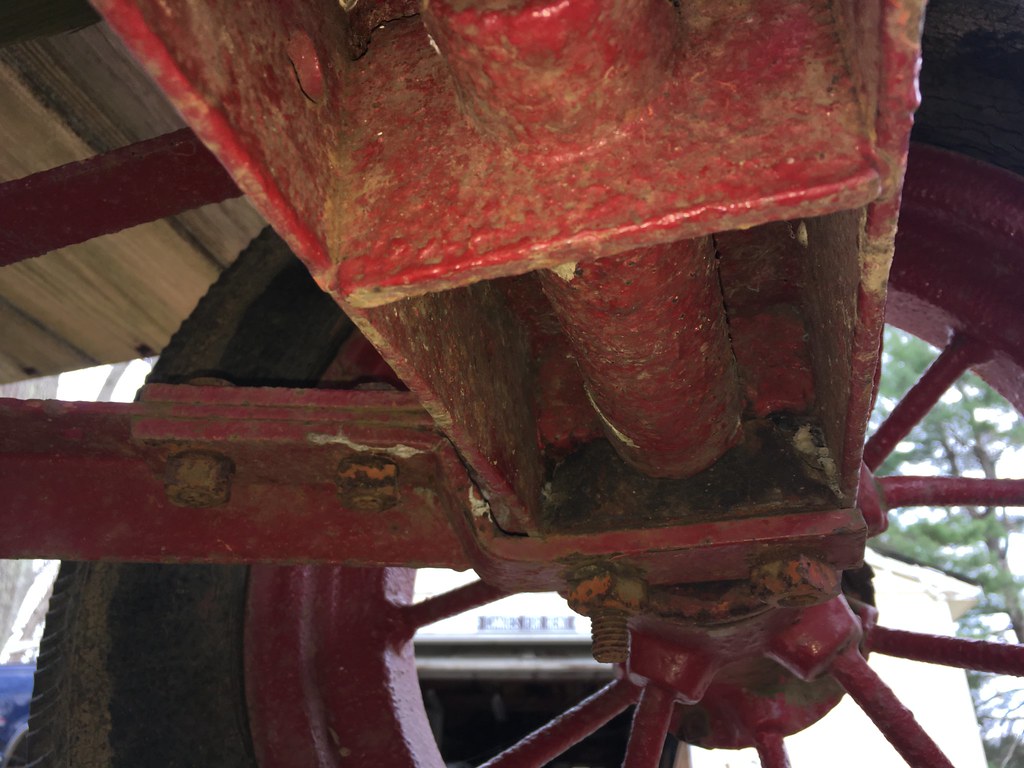
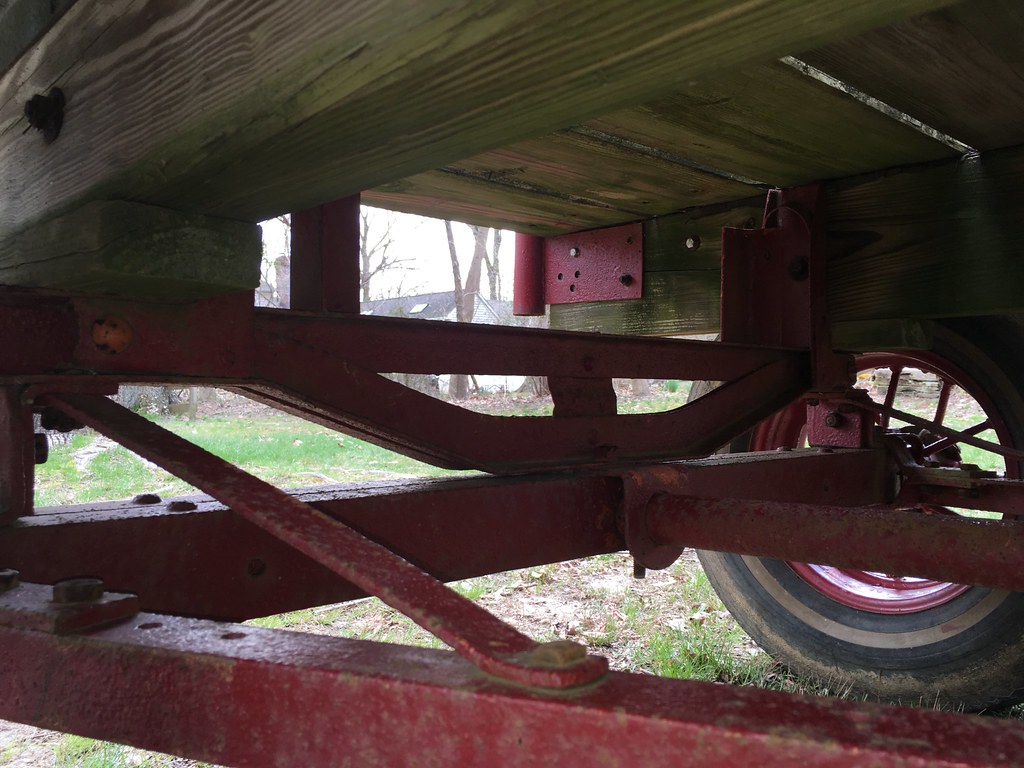
Here are a group of pics. I'm hoping that maybe someone has one of these and can see right off what it is, who made it and approximately when.
I also noticed that when shaking the wheels the wheel bearings seemed loose. Not sure but are they supposed to be for these early year wagons?
51093000067_d1f0d2c494_z.jpg


51095199590_9226d12473_b.jpg


51094391116_f76d004edf_b.jpg


51094471299_d24dfc551d_b.jpg


51094486652_bf25e1b670_b.jpg


51094391111_cbd9ba90d7_b.jpg


51094391006_5ef37b3729_b.jpg


51094390996_c8afd3f196_b.jpg


51095199380_479739660b_b.jpg


51094486392_38c334ccb2_b.jpg


51094486527_aaed706978_b.jpg


51094486512_df6f5f8495_b.jpg


51094471209_56ff252dc9_b.jpg


51094933603_d7dfa08f82_b.jpg


51094471209_56ff252dc9_b.jpg


51094471274_8c695cf93b_b.jpg
 
Sorry Mike, can not help you out there!

I understand if it is what you was after, but when I see spokes, I run! :lol:

I got 5 wagon gears, one of them I been thinking of doing as you did, posting for possible identification!

(I woulda attempted to buy the david bradley!)

Hopefully someone will point you in the right direction!

Have a Happy Easter!
 
The pictures didn't help me much. I do note that it is almost entirely put together with rivets, 30s or 40s, not likely 50s. Wheels were often bought from wheel companies, So, they usually don't tell much unless there is a logo stamped/cast into the hub cap. No such luck there. A lot of these early implements have plain wheel bearings (bushings). Some looseness, while not exactly normal is pretty common and not a serious problem. Take a hub cap off and see what you have. If it has plain bearings, there is probably still a provision for adjusting the slack. It will probably be crude by comparison to a roller or ball wheel bearing.

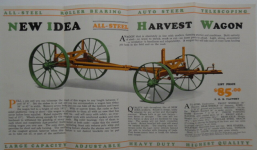
The orange color made me think of Allis-Chalmers. However, there were probably numerous companies that used orange paint. Case? New Idea?
 
Thanks Jim. I read that Farmall tractors took on an orange hue during the war years due to shortages and used what was available. Not saying that makes this an IH trailer but there was a lot going during those years for everyone in the business. I saw a photo of the bearings on another trailer and it’s nothing I’m used to dealing with.
I have to change one tire that’s shredded so I guess I’ll find out then. It’ll definitely be a new thing for me. I over heard the auctioneer say this trailer has “ **** “ wheels on it but I can’t Rene what he said. :roll: Should have asked when it was done but they made their way down the line.
And yes it is riveted and what is bolted the heads and nuts are square. Eventually I guess I’ll find a clue and be able to tell which company made it.
 
1936 Allis Chalmers tractors had spoked front and rear rims. 1937 the rims were stamped steel and the two halves welded together, cheaper and faster to manufacturer.

The spokes are welded to the rim on the running gear and the welding is not pretty.

I don't know the year of, or who manufactured of the running gear. My guess on the age is the 1930's.
 
I have an old spoke wheel IH gear, there are a lot of differences. I have no idea what kind your wagon gear is but it's not likely IH. A lot of the old wagon gears used a straight caged roller bearing (think big needle bearing), some looseness (side play) is normal. I had one with a LOT of play, the spindle, wheel hub and all were trashed. I ended up fitting it with a large bronze bushing and no more pulling it on the road.
 
Eugene":e74n8mdt said:
. . . The spokes are welded to the rim on the running gear and the welding is not pretty. . . .
Note that, along with the poor welding, the spokes are all bent towards the center of the rim. It was no doubt changed over from steel wheels by cutting the spokes down and adding the rims.
 
I also noticed that a couple of the rims have safety beads, supporting Jim's observation, definitely not original to the running gear
 
Gary Dotson":19z4vdlx said:
I also noticed that a couple of the rims have safety beads, . . .
I thought it looked that way too (the left rear), but I tried to ignore it. Maybe it was changed over some time in the distant past then a rim needed to be replaced later on. It also looks like some have the tire valve on the outside while others have it on the inside.
 
Eugene":xnntkttl said:
1936 Allis Chalmers tractors had spoked front and rear rims. 1937 the rims were stamped steel and the two halves welded together, cheaper and faster to manufacturer.

The spokes are welded to the rim on the running gear and the welding is not pretty.

I don't know the year of, or who manufactured of the running gear. My guess on the age is the 1930's.
That describes the way the rims look pretty well.
 
Jim Becker":3ogle2m8 said:
Gary Dotson":3ogle2m8 said:
I also noticed that a couple of the rims have safety beads, . . .
I thought it looked that way too (the left rear), but I tried to ignore it. Maybe it was changed over some time in the distant past then a rim needed to be replaced later on. It also looks like some have the tire valve on the outside while others have it on the inside.
The left rear is different. It’s 15” while the others are 16”. It is also wider.
 
The left rear is different. It’s 15” while the others are 16”. It is also wider.
The rear axle and bolster are from a New Idea wagon originally manufactured on steel wheels. The front axle should have a bolster like the rear . The front bolster appears to be shop fabricated. I believe the front bolster was replaced with a shorter assembly to level the bed. The original wheels would have been 28" in front and 34" rear, so the rear bolster would have needed to be raised if the original front bolster had been kept. I have one of these New Idea wagon gears where the steel tires were cut off and 16" rims for rubber tires welded to the hubs. The hubs fit over straight roller bearings. Would love to fine a set of original steel wheels as the conversion bent the spokes far to the outside. My converted to rubber gear still has the front bolster and 3" of wood to raise the back.
 
Last edited:
The rear axle and bolster are from a New Idea wagon originally manufactured on steel wheels. The front axle should have a bolster like the rear . The front bolster appears to be shop fabricated. I believe the front bolster was replaced with a shorter assembly to level the bed. The original wheels would have been 28" in front and 34" rear, so the rear bolster would have needed to be raised if the original front bolster had been kept. I have one of these New Idea wagon gears where the steel tires were cut off and 16" rims for rubber tires welded to the hubs. The hubs fit over straight roller bearings. Would love to fine a set of original steel wheels as the conversion bent the spokes far to the outside. My converted to rubber gear still has the front bolster and 3" of wood to raise the back.
Name plate on my wagon. The New Idea Spreader company name is a clue as to date of manufacture.
 

Attachments

  • NewIdeaWagon 017.jpg
    NewIdeaWagon 017.jpg
    953.5 KB · Views: 12
Back
Top