Lathe and drill press returned after 47 years... need help!

Dances With Cubs

Active member
I have been inactive for a couple of years. Huge life changes: 3 moves, new home purchase, new missus in my life, and unfortunately I had to sell my Cub. Looking to get another one soon, though. Anyway, here's a story for you.

In 1968 I was a wee lad of 7, and loved my grandfather. The man could make and build anything. He was a world-class machinist. I was too young to appreciate his talents then. But my favorite memories were watching him fix things in his little shop. That year he died of cancer, unfortunately. My grandmother sold the lathe and big drill press to a family friend.

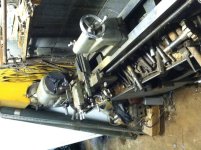
Last year I got a call from my aunt. TC, the man who bought the lathe and drill press, was getting on in years and decided to sell the lathe and wanted to know if I wanted it. Heck yes, I replied!! I had just gotten my 12x16 storage building moved and set up at my new house. I grabbed a few buddies and we spent the morning loading and moving it to my house. TC showed me how to turn it on and loaded tons of bits and chucks and every type of cutting tools imaginable in the back of my Jeep. It took a lot of grunting and straining but we got it in there. The last pic is of the lathe in TC's shop before we moved it, the others are of the pieces after we got them to my shop.


The lathe is a Craftsman but built by Atlas, probably mid-to-late-1950's. The drill press is easy enough to understand, but I have zero experience with a metal lathe. I used a wood lathe in my high school shop class but never a metal one. I'd ask TC to come over but he's really not well these days (Alzheimer's) and he's not able to get out anymore. Very sad to see this man like this, he fought in both Atlantic and Pacific theaters in WWII, always such a tough old guy. So, I'm on my own figuring this thing out.

:help:

The point of my post is to ask if anyone has pointers and instructions and cautions they might can share. I'm sure once I get a new Cub I'll wind up with some need of it. TC also had a welder and I need to ask if he still wants to sell that as well. But I'm sure I'll have my hands busy for now figuring out the lathe.

Thanks in advance for any tips!
 

Attachments

  • image.jpeg
    image.jpeg
    97.5 KB · Views: 2,512
  • image.jpeg
    image.jpeg
    83.8 KB · Views: 2,512
  • image.jpeg
    image.jpeg
    88.1 KB · Views: 2,512
Nice lathe and great story:
Do you ever watch Youtube? If so, there are thousands of videos on there that are good (and thousands that are not).
Search for Mr.Pete222, on of the best on how two. Also Keith Rucker, Abom79 to get you started.
Always wear your safety glasses when you turn on the machine, and of course, respect the moving parts.
 
Some advice, aside from not leaving the key in the headstock chuck :lol: ... I see I'm not the only one who has put a chuck key into orbit.

First is to start working with easy to machine metals or plastic. Brass is easy to work with and forgiving. You will also need a benchtop grinder for forming and sharpening bits for the lathe. So much of the cutting success is dependent on how well you set up the cutting bit and getting the right speed. So, that is the first thing to master. Youtube is a great resource. Once you see how bits are properly shaped for different cutting operations, then the box of bits you have will start to make sense. ("Yeah, that's a RH bit, that's a Outside thread bit, That's a LH bit...")

Other thing I would recommend: Use a carriage stop clamped to the bed of the lathe. The worst thing you can do is crash the headstock i.e. accidentally runing the carriage into the spinning chuck, which is really hard on the cast metal gears in an Atlas-Clausing lathe.

There are tons of other things to learn, like getting the lathe level, adjusting the gibs, etc. But the best way to figure it out is by actually using it.

Oh, and if you feel comfortable using a wood turning lathe, then your Atlas can handle that too. Put a length of steel bar into the lantern tool-post, parallel to the work piece to serve as your tool rest. Lock the carriage to the bed (there is a bolt, top, right hand side, that clamps the carriage to the bed), and set the spindle speed on the lathe to it's highest setting. Presto. Ready to turn wood.
 
That looks like a nice little machine, just right for the beginner. It also looks like you have some desirable accessories, such as colletts & draw bar. There is a lot to learn from the videos, as mentioned, but I also suggest that you locate a book aimed at the novice lathe operator. I,m sure you can find something at Amazon or some such place. Good luck and have fun with it.
 
Thanks for the tips, guys. Good input. I'd forgotten to check YouTube, but yeah, there's always a ton of good how-to videos there. The first thing I need to do is get it properly oiled and greased. I checked it yesterday, gears are pretty well bone-dry. Looks like dozens of places where you have to add oil or grease. Then I'll need to start sorting all the bits and cutting tools. Got a spare chuck and a bunch of bits and cutting tools still in original boxes, but a bunch are just loose. A few metal pieces I can practice on but I need to check with TC at some point and see what else he might have. His shop is a dream for guys like us!
 
Regular oiling: 20 weight machine oil, just keep things oiled. Grease collects the fine metal pieces so I prefer not to use grease.
 
Ditto on the oiling. The Atlas needs oil constantly. If yours is anything like the smaller 6" Atlas I have, you need to oil the bearings every few hours of use. You will find holes, tubes, and cups all over the lathe that need to be oiled all the time. The actual cutting bit also needs a few shots of oil while it is cutting hard materials (anything other than brass, plastic, or wood.) The bit will tell you when it needs more oil to cut with. When you see little wisps of smoke coming up off the bit, then hose some more oil on it to cool it down. A modern lathe has an oiling system to spray cutting fluid on the bit constantly. We have to do it the old way ;)

I also keep a can of oil and a cheap 1" paintbrush handy at all times. Chips will collect on the bed and cross-head, so the paintbrush is used to sweep them away. Resist the urge to use your finger to wipe them away... the chips off metal turning are surprisingly sharp. ;) The pan under the lathe is NOT for storing tools. It is for collecting the metal chips and oil that is coming off the lathe. So once you get the tools sorted out, put them aside and off the lathe. Also, don't lay tools on the bed of the lathe. They are key to the lathe's accuracy and need to be protected from any damage.

Oh, and you can re-use the oil that drips off the lathe into the pan. Run it through a paint strainer to separate the metal chips from the oil. Then use that waste oil as cutting fluid to cool and lube the bit. Obviously you don't use that oil to lube the bearings and gears, but it can be used as cutting oil over and over.
 
Gary Dotson":16gk8l3v said:
I also suggest that you locate a book aimed at the novice lathe operator.
Check Sears on-line. They may still have the lathe operator's manual. Also check Atlas on-line.
 
handy tool to have in the shop.
the best part I made so far was a spacer for the PTO on the 185
ya it would have been cheaper and faster just to order one but I guess pride got in the way [and enjoyment too] :mrgreen:

Mike :tractor:
 
Cutting oil/fluid. Not the same oil as is used to oil the machine. They work in total opposite. Oil lubricants. Cutting fluid promotes cutting.
Find some aluminum bar stock scrap, very easy to turn. Good for learning how to make chips.
If you know anyone or of anyone who works at or has worked as a machinest or tool maker he/she would be your bet. A mentor you can talk to while useing the equipment will get you going faster.
No matter how you proceed be carefull and you should enjoy it.
No rings on fingers, no ties, no gloves. Shouldn't wear sleeves if you do wear a sweatshirt. If you have long hair do something to be sure it's not going to ruin your day. The spinning chuck and parts can and will given a chance grab on and not let go!
I have a shaft or two I need turned.
Al
 
Just my .02,but if you can,especially till you get some experience,run the drive belt LOOSE!(loose) Will save your machine and possibly help prevent ouches!
 
Back
Top