Interesting, thanks. So the governor 1800 rpm limit is probably optimized for torque, and not to protect the engine against damage due to over-revving. Good to know.I refound this post from 2006 from Jim Becker about 1962 lo boy sales information. Jim is always the authority on specs and part numbers.
"Aug 17, 2006
Edit bookmark
#3
Charts were published with the industrial sales information. This is what was published for a Lo-Boy in '62, stripped engine running on 91 RON gasoline (about 86 or 87 octane on today's gas pumps). (Reading best I can from a chart.)
RPM . Torque . hp
600 -- 32 ----- 3.5
800 -- 34 ----- 5.25
1000 - 36 ----- 7
1200 - 38 ----- 8.75
1400 - 39.5 --- 10.5
1600 - 39.75 - 12
1800 - 39 ----- 13.5
2000 - 37.5 --- 14.5
2200 - 36 ----- 15.25
Looks like the peak torque is at about 1550. Note that governed speed is 1800. Max full load speed is normally about 1600, which is pretty close to the peak torque speed.
Torque curve is pretty flat. Makes horsepower almost a straight line against RPM. Pretty clear where most of the higher power came from in the later engines."
So in 1962 they we ok with the cub at 2200 RPM

You are using an out of date browser. It may not display this or other websites correctly.
You should upgrade or use an alternative browser.
You should upgrade or use an alternative browser.
Increase max rpm to 2000?
- Thread starter Al-turbo
- Start date
The stationary engines ran at about 2500 and the numbered cubs were close to that. at the end as the cub was marketed more for cutting grass than farming the RPM keep increasing. It was called the horsepower wars. Max torque was always about 1600 and about the same max number. The RPMs are the only thing that charges in a meaningful way over the life of the engineInteresting, thanks. So the governor 1800 rpm limit is probably optimized for torque, and not to protect the engine against damage due to over-revving. Good to know.
No search button on my iPhone, not on my MacBook.Are you accessing the forum on a cell phone?
I believe the gap between the spec 7.3 mph and what I measure 11 mph can only be explained by a different gear and/or diff ratio.Valid point. Considering the greater need for street-worthiness in Europe, they could have been geared higher. However, according to the 1956 French Cub Parts Catalog, the gears were the same as the early US Cubs. So, the data presented here should apply. A change could have been made after the Catalog was produced and before this tractor was made.
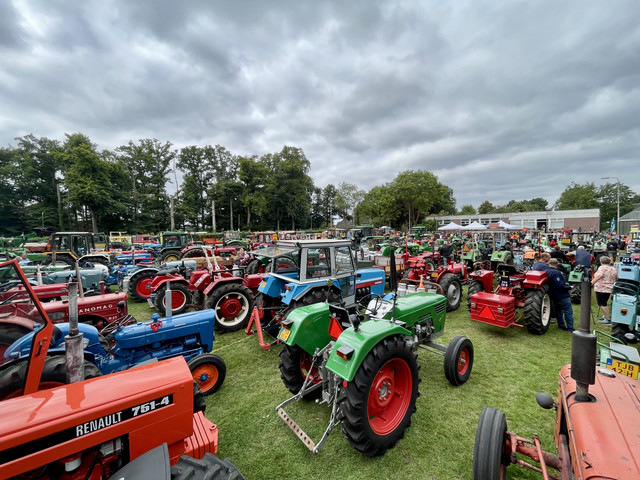
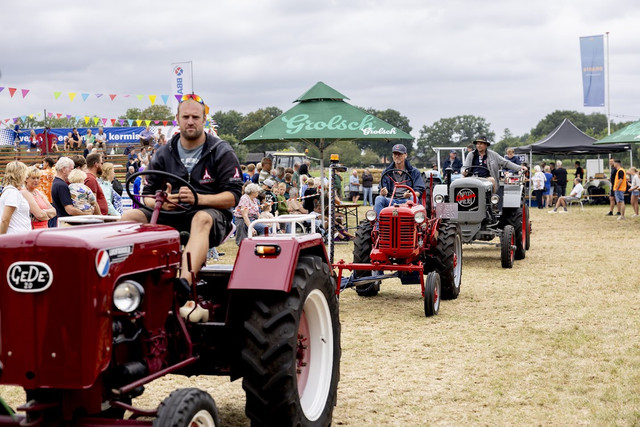

So I joined the classic tractor tour on Saturday, everything went well. The average speed of the 150 tractors was 13 mph though, and my poor Cub could not really keep up at just 11 mph.
So if I want to join again next time, I will have to find a solution to increase the topspeed by just a little bit. Perhaps tweaking the carburator or even the compression, whatever it takes.

That’s one fine looking machine!
You guys have me perplexed. My 7.3 MPH tractor at 1800 RPM. The French Cub at 11 MPH. No way the final drive ratio is the same between the 2.
Went and bought a tach. 65 offset lowboy. Wot 1775 rpm at the pto pulley. Virtually no load
Backed governor screw out 1/2 turn at a time…2+ turns later…about 1950 rpm…enough to need another tooth on the throttle sector.
Probably has more in it, but now I have to get used to the breakneck speed it now mows at.
You guys have me perplexed. My 7.3 MPH tractor at 1800 RPM. The French Cub at 11 MPH. No way the final drive ratio is the same between the 2.
Went and bought a tach. 65 offset lowboy. Wot 1775 rpm at the pto pulley. Virtually no load
Backed governor screw out 1/2 turn at a time…2+ turns later…about 1950 rpm…enough to need another tooth on the throttle sector.
Probably has more in it, but now I have to get used to the breakneck speed it now mows at.
Looks like a great time, glad you were able to participate. A lot of interesting tractors there.
Last year I participated in a short fun ride through town. I drove my '55 LoBoy, it was the smallest tractor. On a straight road, with a tail wind, I think I hit 9 mph!
Thanks for sharing,
David
Last year I participated in a short fun ride through town. I drove my '55 LoBoy, it was the smallest tractor. On a straight road, with a tail wind, I think I hit 9 mph!
Thanks for sharing,
David
Matt Kirsch
501 Club
So if I want to join again next time, I will have to find a solution to increase the topspeed by just a little bit. Perhaps tweaking the carburator or even the compression, whatever it takes.
A kinetic recovery rope, discretely attached to the tractor in front of you, would do the trick...
 Pick a large tractor to follow so the driver might not notice.
The problem you have is that as speed increases in a linear way, the HP requirement increases exponentially. You need more HP than the tractor is making at 2200 RPMs to maintain the speed the tractor is going at 2200 RPMs. My guess is you need closer to 20HP to maintain 11-12MPH, especially if there are any hills.
It's going to take extreme measures to get 20HP out of a Cub engine. I know IH claimed that the engine in the 184 had 20HP, but the 184 dyno runs I've seen published here don't even come close.
staninlowerAL
501 Club
 Stan
Stan
DonMountain
Well-known member
I believe the engine transplant to build a Cub racing tractor is your only practical solution. That V-Six engine shown by staninlowerAL would be the way to go. Cranking 5000 RPM's would get you there in a hurry. But you better have that front end and steering tight as a drum!
Matt Kirsch
501 Club
...or recreate the Cubota.
Gary Dotson
501 Club
Cubota will hit about 20 mph but I don’t recommend it or practice it. The front end gets pretty scary. I don’t generally exceed 11-12 mph. Then again, it seldom sees the rad.
I believe my tractor is slightly oversped (not by me) and I have issues with the engine not cooling well enough that my oil gets hot and begins to leak slightly from the rear main seal. If I drop it just one tooth it cools down enough that I have no leaks. Maybe it’s just my worn out tractor though.
Matt Kirsch
501 Club
12MPH would be perfect for the OP's needsCubota will hit about 20 mph but I don’t recommend it or practice it. The front end gets pretty scary. I don’t generally exceed 11-12 mph. Then again, it seldom sees the rad.
Working on my Cub again. Started with compression testing to check the mechanical condition of the block. Results: all 4 cylinders 9.0-9,5 bar (130-138 psi), engine cold. Very high, so nothing to gain there. The governor spring appears to be the big one (diameter .74 instead of .63"), designed for 2050 rpm high idle. I will reassemble everything and make a test run again, this time measuring the rpm's at top speed. If >2000 rpm, not a power problem I guess, and adjusting the governing stop setting might help. If <2000 rpm: top speed limited by engine power.
Comments please.
Comments please.