Rudi":rehmiicd said:
Hemlock as previously mentioned, if available would be a good choice. Does not rot as fast as spf and has quite a high specific density.
When I was landscaping (backwhen my body actually worked.. :twisted: ), we had the opportunity to buy CCA treated hemlock landscaping timbers in 10X10 12ft size (it varied greatly), produced locally here. The price was less than half that of PT SPF timbers. We used them as fast as they could make them, and built retaining walls by the dozen. The downside is that it took me, and 3 high-school football players that we hired for the summer, to put them in place. Each weighed approximately 300 lbs. As we nailed them in place with barn spikes, the "juice" would fly out of them. This was a combination of hemlock's resistance to drying and improper drying after pressure treating. Hemlock, thankfully, does not warp much when left to dry in the open.
I burn a great deal of hemlock slabs, actually. They're not all that resinous, despite being a conifer. They're not safe to use as firewood outdoors, though, because they "pop" and spark something fierce. In a stove, though, they're great.
There are a great many "ancient" hemlocks around here, in original forest areas at the bottom of valleys where streams run. They seem to like the water, and have massive root systems. Hemlocks, like black walnuts, produce chemicals in their roots, hampering the ability of other trees to grow. This, in nature, results in "hemlock groves" where acres of these massive trees climb upwards to 80 ft or more, and live for centuries. When I was a boy, I used to help my great uncles "top" the 30 footers, as the growing tops of this sized tree are a nearly perfect, soft, christmas tree. They used to sell these "tops" as christmas trees on their milk route, back before christmas tree farms were the "in" thing, for $3. I was always too fat to climb the trees (so where they, but if I fell out of a tree, their sister would have killed them), but I'd help haul out the tops to the wagon. In those days, everyone put up their tree on the weekend after Thanksgiving, and left it up until Epiphany, so hemlocks were a good choice, as they didn't lose their needles very quickly, either.
Some 35 years later, my cousin is dealing with the repercussions of topping hundreds of hemlocks. He is sawing the logs from those trees, which now have a nasty crotch in them. Oh well, more firewood for me.
The downside to these magnificent trees is that the sawdust from them cannot be used for horse or pig bedding, as it is toxic to monogastrics. I've used it for chicken and duck litter already, though, with no unpleasant side effects.
One last thing about hemlocks: The stumps are a great substrate for the fungus that creates the visual illusion called "fox fire". I've only ever seen it here in hemlock groves, on rotting hemlock stumps.

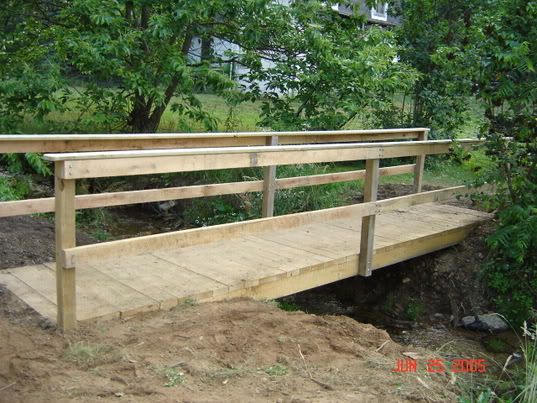
 I couldn't blame him, but it really brought home the differences between trees growing in the woods and trees out of somebody's front yard. If you frequent farm auctions you can find old rough sawn lumber, mostly oak, in varying quantities. I buy it every chance I can get it reasonable. Most people don't want to load it and haul it off, no matter the price. Larry
 An engineer I work with has what you could call a small nursery on his property and said he has roughly 300 small trees he will have to cut down and burn for wood or they will just die. He told me that they are airborn and can fly a distance of roughly half a mile so he's probally already infested he says. And from what I understand the hauling of wood was a large part of it. While I know this cannot be good hopefully it wont be as bad as it sounds. I remeber when the lake first started getting zebra mussles and it sounded like the end of the world. Now there talking about some of the benefits of them (although I think the disadvantages far outnumber them) We also have a lot of Gobys in the lake now and I dont know anything those nasty things are good for, the seagulls wont even eat them, we catch them a lot perch fishing. Obviously all these things are naturally not supposed to be here so its a shame that they are,I guess thats the price you have to pay for convenience...
