Electrolysis tank building

Jackman

501 Club
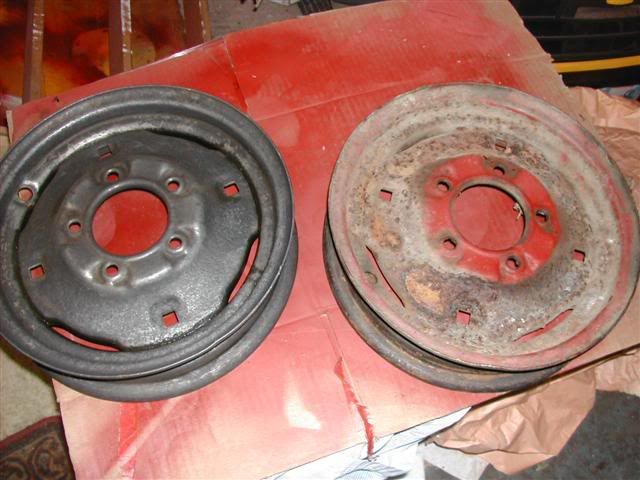
When building an electrolysis is there such a a thing as too big? I am gethering the parts to build one just like Corky's Cub in the how to section but I have found and want to use a 110 gallon size tank, it looks the same as what Corky used just bigger so I wonder is there a down side to using a bigger tank :? will it work as good as a smaller tank? the ulimate plan is to e-tank the big parts such as the hood and rear rims........

A big thank you to Corky's Cub for the how to build the e=tank :big afro: :big afro: :D :D

viewtopic.php?f=11&t=24554&p=186278&hilit=electrolysis+tank#p186278
 
Nope, as long as the electrolyte is sufficient and the container is nonconducting.
I've been salivating over one of those 250 gal. food grade liquid containers,
just haven't justified the $$ yet :shock:
 
Just be mindful of what it is going to weigh. 200 gallons of water is heavier than your whole tractor. Don't prop it up on cinder blocks.
 
Jim Becker":2vhkh04p said:
Just be mindful of what it is going to weigh. 200 gallons of water is heavier than your whole tractor. Don't prop it up on cinder blocks.
I agree, most of those plactic tanks around here come with a square steel cage built around them.
 
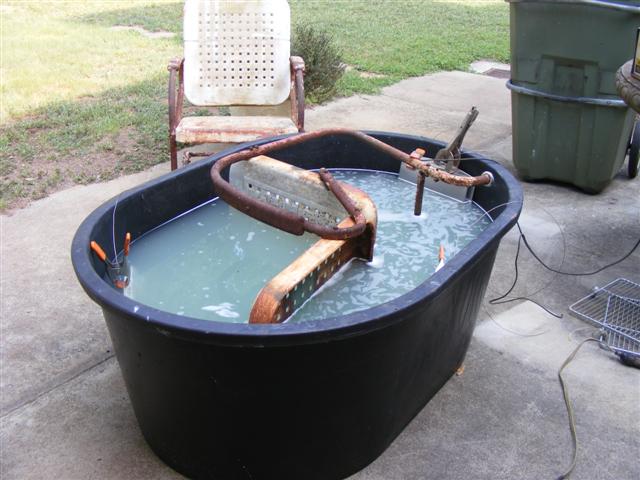
110 gallons Have fun!!!
DSCF3071.JPG


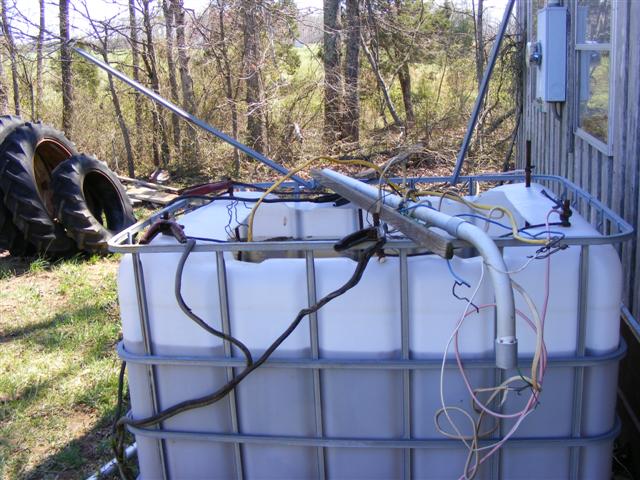
Even bigger :!:
DSCF1447.JPG
 
Might consider the size and shape of the object being cleaned. I use 5 gallon plastic buckets for most small part cleaning and a 32 gallon plastic barrel for larger items. But then, I have no permanent place to store a larger tank when not in use.
 
Jackman":3g18l7ts said:
That extra big tank that Jimt has would be the answer :big afro: :big afro: but what to do with it when not in use....

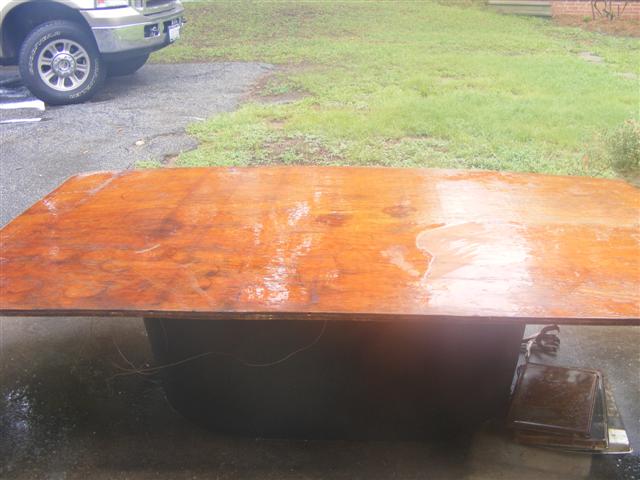
Just put a top on it and use it as a table for "wee ones"
tank_top.JPG
 
Jack:

Tanks such as this one:

1600%20Litre%20Electrolysis%20Tank%20-%2001.jpg


are usually free for the asking. Most stove oil/heating oil dealers have these. They have a life span for fuel, and once that lifespan has been reached (usually about 5 years), then they have to dispose of them. The like it when folks ask em for them as it saves them disposal fees. My brother-in-law helped Dad get this one with 200 gallons of furnace oil still in it. Dad used the oil, I inherited the tank. This one is 1600 litres or about 440 US gallons. Large enough to do a whole rear end, torque tube etc..

A pallet is more than sufficient to carry the load as the weight is spread over many square inches, in fact this pallet has been used under the tank with a full load. The pallet also provides a bit of height which allows for drainage as well as these tanks come already plumbed.

I think that a bit later this week, the tank is going to undergo it's transformation into a very large Electrolysis tank. I got 3 weeks to get it ready for CubFest Northeast NB 2009, so time to boogie. Pics as it goes along. It is already in place in the pole barn right under the beam where the electric hoist will help load the parts :idea: :D
 
Wow you all have some big tanks :big afro: , I am still looking for a tank ifn I don't find a freebie one by the weekend I will get the TSC 110 gallon unit for 70 dollars.

I found that portable toilet companies have a hard time getting rid of those 55 gallon blue plastic drums so they give them away however I want bigger so will pass on that..

Rudi those plastic oil tanks might be a Canada thing cause I am a home heat oil driver 22 seasons on the job and my boss would probley fire me in a heart beat ifn I filled a plastic tank , all our tanks are steel single and double wall (made in Canada by Granby tank co.)and steel piped too filling a steel tank with plastic fill pipes is also a big no no too,,,,,,,,,, good idea you have I find it extra intresting since my season winter job is filling oil tanks but we just don't have plastic tanks heare :( ........

thanks all :D
 
Hey Jackman, thanks for the compliments on the How-to article. Everyone here beat me to the answers to your questions, and probably answered them better than me anyway. But the thing I like about the one I made is the portability. I can fill it up (about 45 gal I think), and easily roll it around on a small cart (the blue frame you see under it in the article) But I would probably have built it originally in the 110 gal version if my local TSC had kept that size in stock at the time. With that size, you'd have to probably mount it permanently on a table or something, because it would be way too heavy to move around.

One thing about my article that probably needs changing: you don't need NEAR as much TSP per tank as my article states...probably half as much will still produce the optimal 15-20 amp reading and you'll be bubblin paint and rust off your parts in no time!

Corky :big afro:
 
Hey Corky, That's an excellent How To that ya did :big afro: I am going to make mine the same way too. Two questions how long do you leave the parts in and also what about the left over solution is it toxic and if yes how do we get rid of it?

Thanks :D
 
Jackman:

You will probably get a number of opinions on this, but by experience I know that the residue is not really toxic nor is it a pollutant in the concentrations that would be used in an E-tank. It sure is one heck of a good fertilizer though, as where I have emptied my tank (I have a ball valve drain cock on mine), I have nice lush green grass. It also doesn't seem to have hurt my pond either.. as some inadvertantly got into the pond when it was last drained. You should be able to simply dump it on the lawn.. and it will perk down and fertilize the soil.

TSP is essentially salts and phosphate. Salt can be a good soil amendment in areas where the soil is pretty weak... for lack of a better term at the moment. Phosophates are found naturally in the soil as any prospector/rock hound can attest to. In small quantities it does not harm the environment, but in huge quantities such as via a sewage treatment plant, phosphates can bring on algae blooms as was demonstrated in Lake Erie in the 60's or so. However, that was largely caused by industrial dumping and not the ordinary garden variety volume from residential areas. So it should not be harmful at all. Also the rust etc., is a good soil amendment as well as iron oxide is beneficial in some small quantities. Judging by the colour of my very green and lush grass by the shop :big smile:

As for the oil tanks.. these are only used in the dealers yards here and under specific guidelines. They are never used as home heating oil tanks.. ever :!: Home heating oil tanks must meet federal govenment guidelines and they have become very very strict. A 10 year old tank has to be replaced and they must all undergo testing to ensure structural integrity. Granby is a pretty good name in oil tanks and I see hundreds of them every month on the flatbeds that Burgess has next door at the mill. He uses it as a marshalling yard for some of his tractor trailers.

There are also the landscaping tanks that usually come up for sale. Construction companies use them to haul water for some road projects, they are used to provide water to municipal crews when watering municipal flower pots/gardens etc. They are like the one David has:

DSCF1447.JPG


Very useful size
 
Thanks Rudi I guess a green lawn loaded with iron is another benefit of electrolysis :lol: :lol: , sure beats rust in the eyes and old paint dust in the lungs ,, can't wait to try electrolysis out.......... Tomorrow I am getting the 110 gallon tank it seems to be the best deal as those big white ones are way too pricey for me :shock: ......
 
They haul fish in something like that one giant tank, but I have never seen a stray spare one. (and my eyes are always open, despite my limited space.)

Usually for giant stuff I bite the bullet and get it sandblasted. But you can fit most Cub parts into a 55 gallon drum, the list of parts I have done in one is pretty impressive.
 
Buzzard,

Can you do the hood in a 55 gallon drum :? , maybe flip it as in one side at a time :idea: ......... How did you do the hood?
 
Around here in SE Kansas the 275 gal chemical totes are generally free. The farmers purchase chemicals in them and then they get left sitting in a fence row.

A few months back there was a guy in Topeka Kansas on craigs list that was selling them for $6.00 apiece. He had about 50 of them and could get more.

Check with an ag supplier to see if you can get one from one of their customers.
 
Hoods are a special case in my book. The two I have done were wire wheel on an angle grinder (used to be my favorite pastime :roll: ) and sanded and painted by a pro. The big advantage is they are good at it and it gets the hood out of the way when I work on the rest of the Cub. Since I am not in a hurry for it, they can do it as a 'filler' job.

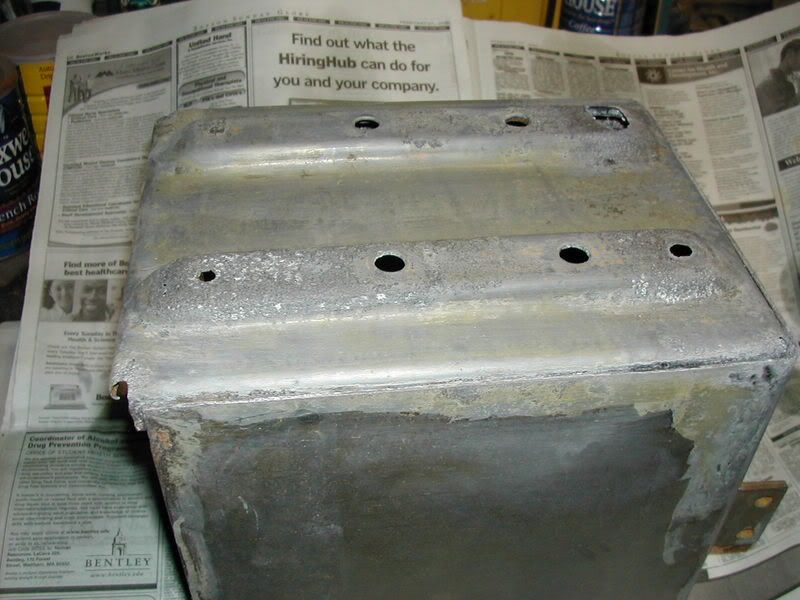
But, you can certainly do portions at a time.... think of a battery box in a 5 gallon bucket, almost impossible to do all at once, but easy if you do it hanging in a couple of different positions. Same with a fender in a 55 gal tank.

I believe the tank is best for stuff you cannot easily 'clean' using other methods. It's ideal for some things and for others it's just easier to use a wire wheel (but that will not get all the rust).

DSCN01234734DSCN0123.jpg


955567e3.jpg


e2d29e1d.jpg
 
Back
Top