This is Barebones today and it's a 1948. No electric, no hydraulics - just a PTO - the only option. Never had a muffler but the extra-tall straight exhaust will scream at 2650 RPM (verified by Rick Prentice's dyno). Restored in year 2001 and has International tractor paint. Steering wheel was restored by Minkota. Bored 2,000 over and has the original Internatioal carb. Starts with half a turn. Always stored indoors under 2 blankets. Runs on recreational fuel and at $6.50/gallon doesn't seem as bad with regular ethanol blends at today's prices. Firestone tires. Every nut and bolt. Mostly used to haul a trailer with wood for the outdoor furnace. Sold all the implements intentionally, because I never had any intention to work it, although I have pulled an 8-foot cultipacker with no issues. But, today we just ran high in the saddle on the trails out back. It's just plain fun.

You are using an out of date browser. It may not display this or other websites correctly.
You should upgrade or use an alternative browser.
You should upgrade or use an alternative browser.
Cub after 25 years
- Thread starter Barebones
- Start date

Small tractors
Active member
The ones without hydraulics and even an electrical system are appealing in their own way, and practical in some ways too. Very nice.
I gotta cub
Active member
Very nice 48....My cub is also a 48, with no hydraulics. Mine is an early 48.
Mine still has all the manual levers...runs great, and I agree with you, that they are just plain fun to drive around.
Mine still has all the manual levers...runs great, and I agree with you, that they are just plain fun to drive around.

Don McCombs
501 Club
Great looking tractor.
Never did anything to make it run so strong. Sitting around the campfire at Rick Prentice's Cubfest in 2009, others looked at the dyno sheet for my Cub. Nobody knew for sure how but some thought it had a power generator used in power units. The test began at 2400rpm, although the rpms soared to 2650 before loading.My recently acquired '48 also has no hydraulics or battery ignition.
So what exactly did you do to make it run at 2650 rpm?
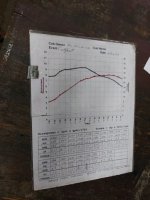
Seems like pretty normal numbers for a cub except for the unlimted RPM... maybe it just had the govornor swapped or modified for some reason, it certainly seems like the valves are floating or just limited by airflow at higher RPMs which is probably what is limiting it form going even faster.Never did anything to make it run so strong. Sitting around the campfire at Rick Prentice's Cubfest in 2009, others looked at the dyno sheet for my Cub. Nobody knew for sure how but some thought it had a power generator used in power units. The test began at 2400rpm, although the rpms soared to 2650 before loading.
Gary Dotson
501 Club
A power unit governor will sometimes generate those numbers. I swapped out the governor on my “48” with one from a power unit and had just over 3000 rpm available. That tractor is now Cubota.
I remember you, Gary. If I recall correctly)A power unit governor will sometimes generate those numbers. I swapped out the governor on my “48” with one from a power unit and had just over 3000 rpm available. That tractor is now Cubota.
Nothing compared to this dyno sheet at the Cubfest near Grand Rapids, Ohio, 2009. Look at how the horsepower runs consistently through a wide range of RPMs, as well as the torque. The dyno sheets I looked at had sudden drops in HP and torque once they peaked. Not barebones. Don't know about valves floating. Never heard them float. I realize you are speculating, but it doesn't ring true to my 25 years operating this machine. No offense intended, but no such issues.Seems like pretty normal numbers for a cub except for the unlimted RPM... maybe it just had the govornor swapped or modified for some reason, it certainly seems like the valves are floating or just limited by airflow at higher RPMs which is probably what is limiting it form going even faster.
Gary, your Cub had a diesel engine from a Kubota, if I recall correctly. I remember it spinning 3000 rpm on the dyno that day. Did a good job plowing, too.
Gary Dotson
501 Club
Before it became Cubota, as a stock tractor, it had a power unit governor allowing it to run just over 3,000 rpm. As Cubota, it now is capable of 3600 rpm. The Cub dyno will not tolerate that so we never actually got a good power reading on it. Steve Butram now has the Cub dyno and we’ve run Cubota on it several times, primarily for a smoke show. Steve is now, also the owner of Cubota. Steve And I were probably the ones running the dyno for Barebones pull.
You are probably correct. I took over logging readings on the dyno for some time at the event. A good learning experience. I never had a clue about the output of these diminutive machines. I've kept the graph all these years.Before it became Cubota, as a stock tractor, it had a power unit governor allowing it to run just over 3,000 rpm. As Cubota, it now is capable of 3600 rpm. The Cub dyno will not tolerate that so we never actually got a good power reading on it. Steve Butram now has the Cub dyno and we’ve run Cubota on it several times, primarily for a smoke show. Steve is now, also the owner of Cubota. Steve And I were probably the ones running the dyno for Barebones pull.
Since the horsepower peaks at 1900-2000 rpm and then begins to drop, what is the point of higher rpm? Why would the power units run at 2500 or so, if available hp was less than at 2000? That is what I'm struggling to understand.Never did anything to make it run so strong. Sitting around the campfire at Rick Prentice's Cubfest in 2009, others looked at the dyno sheet for my Cub. Nobody knew for sure how but some thought it had a power generator used in power units. The test began at 2400rpm, although the rpms soared to 2650 before loading.View attachment 75310
It seems to me that any real improvement in the Cub's output would come from improving its breathing which would increase both torque as well as allow it to make more hp at higher rpm.
Not sure what carb OP has, it may be the IH carb which is smaller, later ones all had the zenith carb which is larger. That could explain that. Also I think there were different manifolds.Since the horsepower peaks at 1900-2000 rpm and then begins to drop, what is the point of higher rpm? Why would the power units run at 2500 or so, if available hp was less than at 2000? That is what I'm struggling to understand.
It seems to me that any real improvement in the Cub's output would come from improving its breathing which would increase both torque as well as allow it to make more hp at higher rpm.
I have a Chinese manifold and opened it up (ported) along with matching the exhaust ports on the engine. The carb is original IH. Straight exhaust has to help the breathing, too.Not sure what carb OP has, it may be the IH carb which is smaller, later ones all had the zenith carb which is larger. That could explain that. Also I think there were different manifolds.
Well that shoots that idea in the head probably!I have a Chinese manifold and opened it up (ported) along with matching the exhaust ports on the engine. The carb is original IH. Straight exhaust has to help the breathing, too.
That still leaves valve float I guess... any chance you ever installed stiffer valve springs? Maybe the stock ones are stiff enough but can't say without testing I guess.

staninlowerAL
501 Club
YUP!!! No blended fuels in the small engines for me either. Nuttin' but trouble. I also use a stabilizer in all my small engine fuels. Cheaper than working on the fuel systems. Stan....................No ethanol blends. Too much trouble with that stuff over the years.
Not needed.Only change to valves was to add hardened seats so I could run modern fuel without lead additives.
And, so have I learned. No foul, either.Not needed.