Volt meter on my CC RZT 50

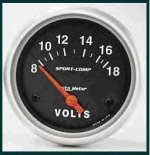
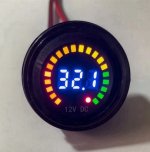
I plan to install a volt meter on my mower to be able to monitor the battery condition/charge since I have intermittent problems with starting. It doesn't happen often but seems like when it does it's because the battery is not at full charge. I've replaced the battery this year with a 340 cc amp version but with no way to easily keep a check on it this seems to be a good option. Any thoughts? Stan
 

Attachments

  • volt gauge1a.JPG
    volt gauge1a.JPG
    13.9 KB · Views: 3
  • volt meter.jpg
    volt meter.jpg
    34.9 KB · Views: 3
I plan to install a volt meter on my mower to be able to monitor the battery condition/charge since I have intermittent problems with starting. It doesn't happen often but seems like when it does it's because the battery is not at full charge. I've replaced the battery this year with a 340 cc amp version but with no way to easily keep a check on it this seems to be a good option. Any thoughts? Stan
Seems like keeping a trickle charger on it would keep it charged up until the battery ultimately fails, negating the need for a voltmeter. That’s the faster/easier route, anyways.
 
Seems like keeping a trickle charger on it would keep it charged up until the battery ultimately fails, negating the need for a voltmeter. That’s the faster/easier route, anyways.
Yup, good idea, thanks and it probably would make the battery last longer too. The downside is I don't have available AC power so solar would be the only other option and from what I've seen they are a bit expensive just for a lawn mower battery. I'm aware of the possibility of a parasitic drain if it's not installed in such a way as to eliminate that. Several ways to make it work. Stan
 
Try this circuit using a 12V, 30 Amp isolation relay. This should solve your problem of draining your battery from a small leakage/parasitic current.
Thanks for the info. The problem is not a parasitic drain, seems as though the battery lost its charge while in use. I topped off the battery and put it on a 12 hour slow charge and had it tested. Tester reported the battery good (it's 6 months old and no prior history of problems). I'm aware of the fact that there could be other problems that would have similar symptoms but the engine started fine with a jumper boost from a 12v battery with no additional problems, so I'm planning to monitor the battery condition/charge with the volt meter to try to determine if there's a problem with the charging system or if something is killing the battery on an intermittent basis. The battery is fully charged and I'll be using it again for about 3 hours today or tomorrow so we'll see what happens. Stan
 
Thanks for the info. The problem is not a parasitic drain, seems as though the battery lost its charge while in use. I topped off the battery and put it on a 12 hour slow charge and had it tested. Tester reported the battery good (it's 6 months old and no prior history of problems). I'm aware of the fact that there could be other problems that would have similar symptoms but the engine started fine with a jumper boost from a 12v battery with no additional problems, so I'm planning to monitor the battery condition/charge with the volt meter to try to determine if there's a problem with the charging system or if something is killing the battery on an intermittent basis. The battery is fully charged and I'll be using it again for about 3 hours today or tomorrow so we'll see what happens. Stan
The charging system may not be working. Get a DC voltmeter and put it across the battery. Nominal battery voltage should be12.3V-12.6V. With the voltmeter still on, start the engine. The voltage should go up about 2V - a little over 14V. If it stays the same, the system is not charging.
 
The charging system may not be working. Get a DC voltmeter and put it across the battery. Nominal battery voltage should be12.3V-12.6V. With the voltmeter still on, start the engine. The voltage should go up about 2V - a little over 14V. If it stays the same, the system is not charging.
That's the purpose of the volt meter that I'm looking to install so if it intermittent maybe I can monitor it over time.
 
Update after today's use. Started with a fully charged battery, installed it and started up with no difficulty. Ran the engine a full throttle for 1.5 hours. stopped the engine and reconnected the variable 0-6A charger and the output pegged the charger at 6A. After 1 hr charging the charge rate was auto reduced to 1.5A so since I don't have the capability to check the battery yet with a meter/gauge I've concluded that the charging system has a fault somewhere. This is the original, 20 y/o 20hp B&S engine with about 950 hrs on the meter. I think the charging system is built around the C/S under the flywheel but that's getting a bit deeper into it than I'm able to do. I'll confirm the output when I get the meter/gauge so I can measure the battery charge state before and after starting. Any suggestions welcome. Stan
 
Update after today's use. Started with a fully charged battery, installed it and started up with no difficulty. Ran the engine a full throttle for 1.5 hours. stopped the engine and reconnected the variable 0-6A charger and the output pegged the charger at 6A. After 1 hr charging the charge rate was auto reduced to 1.5A so since I don't have the capability to check the battery yet with a meter/gauge I've concluded that the charging system has a fault somewhere. This is the original, 20 y/o 20hp B&S engine with about 950 hrs on the meter. I think the charging system is built around the C/S under the flywheel but that's getting a bit deeper into it than I'm able to do. I'll confirm the output when I get the meter/gauge so I can measure the battery charge state before and after starting. Any suggestions welcome. Stan
I have a Walker mower with a B&S Vangaurd 18 Hp engine. It is a little over 20 yrs. old. A few years back the charging system quit. I replaced the Voltage Regulator/Rectifier. I replaced it with a B&S OEM regulator. It has been fine ever since. Your engine may have the same type regulator. It is externally mounted, down low, on the engine. It measures 3/4" X 2.0" X 2.25". I has one red wire and two yellow wires that have "plug in" connectors. It is very easy to change.
 
I have a Walker mower with a B&S Vangaurd 18 Hp engine. It is a little over 20 yrs. old. A few years back the charging system quit. I replaced the Voltage Regulator/Rectifier. I replaced it with a B&S OEM regulator. It has been fine ever since. Your engine may have the same type regulator. It is externally mounted, down low, on the engine. It measures 3/4" X 2.0" X 2.25". I has one red wire and two yellow wires that have "plug in" connectors. It is very easy to change.
Thanks. Something to check out. I've never had a reason to get into that type of repair. Stan
 
Thanks. Something to check out. I've never had a reason to get into that type of repair. Stan
BS692519 is the Briggs Part No. of the regulator on my engine.
Another thought. Does your mower have an electric solenoid to engage the mower? That solenoid will draw a fair amount of current from the battery after 1.5 hours of mowing if the regulator is not working.
 
Thanks for the info on the part number also about the electric pto current draw. Hadn't give that any thought. I hope the volt meter when installed will allow me to keep a running check on the battery both in use and in storage. I've been disconnecting the battery between use times. Just need more info about what it's doing and when to make a better diagnosis. Stan
 
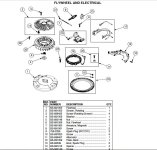
Looked in the RZT 50 Parts Manual and found this: Alternator under the flywheel ............. I thought I had seen this before.
 

Attachments

  • RZT 50 electrical.jpg
    RZT 50 electrical.jpg
    104.1 KB · Views: 7
Looked in the RZT 50 Parts Manual and found this: Alternator under the flywheel ............. I thought I had seen this before.
Your Briggs "Intech" engine alternator is a different design than the Briggs "Vanguard" engine alternator I have.

Your RZT 50 has the Electric PTO Clutch to engage the mower. I measured the current draw of the Electric Clutch coil on my Walker mower. The current draw is 3.0 Amps. If that coil is energized for 1.5 Hours, that's 4.5 Amp-Hours. That's why your battery, needs a charge, and seems weak when you start the engine the next time. Get the alternator fixed and your problem will go away.
 
Last edited:
Your Briggs "Intech" engine alternator is a different design than the Briggs "Vanguard" engine alternator I have.

.......................That's why your battery, needs a charge, and seems weak when you start the engine the next time...............
Got the volt meter and it's ready for a test with this week's mowing. I'm sure I won't be surprised if I see the voltage drop when I do a comparison of readings from beginning to end of use after about 2.5 hours. Thanks. Stan
 
Current update:
1. Removed and charged battery to a test reading of 13.8 volts, let it rest for 2 days and rechecked reading, 13.6 volts.
2. Installed battery with connected digital voltmeter reading 13.4 volts before any load applied.
3. Started engine, meter reading 12.4 volts after starting. Engaged pto, meter reading 12.2 volts.
4. Ran mower, cutting for 2 hr, restarted 1 time, shut down, battery showed 12.2 volts.
5. Reconnected the AC charger and after 15 minutes, meter showed 12.8 volts; after 1 hour charging meter showed 13.8 volts.
At no time during the use did the volt meter show any charging of the battery from the engine alternator. After this testing/use, the conclusion is the charging circuit is faulty for some unknown reason. I do know that the flywheel has to be removed to service and or repair the alternator. At no time was there any problem running the engine so the mags are producing the current to run the engine. Any comments are welcome. Stan
 
Stan, there are basically 2 components to this charging system, you have a stater winding under the flywheel and a rectifier / regulator likely mounted somewhere external on the engine. Find that regulator and disconnect the two wires that Duck inside and go to the stater, check continuity across those 2 wires. You should get a very low ohm reading across them. If open circuit or dead short, flywheel comes off, if reading looks correct (maybe 8 - 10 ohms) go after the regulator / rectifier. There should be battery power on the third wire, if none look for a fuse in the circuit. If the battery power is there, suspect a faulty reg. / rect. They do go bad.
 
Back
Top