American Chestnut

lyle11

501 Club
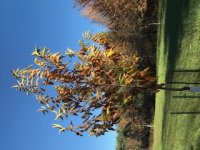
About 5 years ago I planted 2 American Chestnut seedlings on my farm in Wisconsin. You may not know the story of the American Chestnut but it was once as common as an oak in much of the Eastern USA, approximately from Ohio east. In 1904 Chestnut Blight Fungus (most likely introduced from Asia) was discovered on trees in New York and by 1950, almost all of the trees were dead.

It was discovered that trees planted far outside of the original range of the American Chestnut survived disease free for decades, but eventuallly get the blight. Most likely the fungus gets carried by a passing vehicle from the eastern USA. The other interesting thing is that the trees sprout from the roots of dead trees and frequently live long enough produce nuts. So, the tree lives on but gets blight and dies before it grows to even a fraction of full size. The leaves are similar to the blight resistant Chinese Chestnut but longer and the natural size of the tree is much larger and upright.

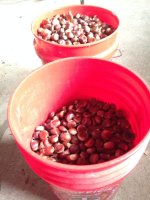
I wouldn’t plant one for a yard tree because of the likelihood of it getting blight, but here I have 80 acres and figured why not try a couple isolated from their natural range. I got 1 nut this year.
5205E952-C48C-4D48-BD2F-B6BE11FFD80E.jpeg
 

Attachments

  • EC42E479-3C32-4AC6-897E-54CBBBFDA767.jpeg
    EC42E479-3C32-4AC6-897E-54CBBBFDA767.jpeg
    83.7 KB · Views: 1,638
  • 70740506-97CD-48FF-818E-F0164F6145E2.jpeg
    70740506-97CD-48FF-818E-F0164F6145E2.jpeg
    55.9 KB · Views: 1,638
Interesting....my house is from 1639 and the post and beam conduction is American chestnut as are the floor boards in the attic. You cannot nail or screw into the wood as it petrified
I thought all the American chestnut trees were wiped out in the early 1800's replaced by European chestnut.
 
I have 3 trees on the property. 1 "older" one and 2 young ones which grew up from nuts planted by squirrels.
I picked 90 pounds of chestnuts this year.

IMG_1740.JPG
 
A farmer planted 9 trees in 1885 in West Salem, WI about 500 miles west of the normal American Chestnut range. They grew blight free until the 1980s. The original 9 trees grew to a stand of several hundred and is now fenced off as scientists try to save them. Scientists have been trying for years to save the American Chestnut which typically involves taking trees that show resistance and growing seedlings from these resistant trees or crossing the tree with a European chestnut. They eventually will probably get a 97% American Chestnut hybrid that survives. Like I said, the good thing is you can still grow the tree to the point of producing nuts so you can keep the species going as scientists and hobby growers experiment with finding a blight free tree.

I have read the trees grow straight and large. Mine have straight trunks and grow fast so I can see how they made good construction lumber although I don’t know how hard the wood is before it petrifies with age.
 
Looking at the nut, I realize we have lots of them down here. trees don't get very big and we call them chinkapins...
 
I’ve never seen one, but from reading about them a Chinkapin chestnut is more of a big shrub rather than a tree. It does not get chestnut blight. I think the nuts are very similar, but a true American chestnut can go to over 100 feet tall.
 
We used to have huge Chestnut and Elm trees here in northern NY. Some old huge stumps still remain, a reminder of what once was.
 
Before the blight, a quarter of all trees in the eastern forests were chestnut, many of the extremely large and old.. Can you imagine 25% of all trees in your area dying?

Check out the american chestnut foundation. https://www.acf.org/

They've been working for years to create a blight-resistant tree and are making progress. The scientests at SUNY have also created a genetically modified chestnut that is blight immune. The blight kills because it produces oxalic acid. Many plants have an enzyme that the chestnut lacks that breaks this acid down. They added the gene into chestnuts and they can survive the blight.

https://www.youtube.com/watch?v=GUQ6fkv ... e=youtu.be
 
Unfortunately, you're right.. Here it is the oaks... after a few years of gypsy moth defoliation, many of them are dead. We've also got the Ash borer moving in as well.
I'm hoping that the ACF manages to bring back the chestnut to the native range.
 
The gypsy moth caterpillar has devastated the oaks in our area of CT. State forest near us has been hit really hard. State brought in logging contractors to cut all the dead trees, leaving tops and crooked trunks to firewood permit holders. Plan on trying for one in the spring.
What was once a majestic hardwood forest is now stripped almost bare. Underbrush will return providing berries and saplings for all kinds of critters, so there is an upside.
 
Back
Top